

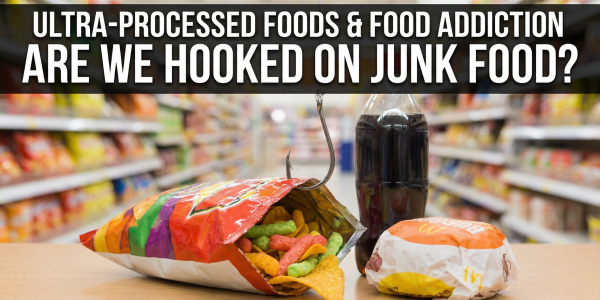
You know that feeling when you finish an entire bag of chips and you’re not even really hungry? Like, you literally just had dinner, but somehow your hand kept going back into the bag. And then you’re sitting there with orange dust on your fingers wondering what just happened.
I’ll be honest—I used to think people who talked about food addiction were being dramatic. Then I started paying attention to my own habits, and honestly, it got uncomfortable pretty fast. The way I’d think about those spicy tortilla chips at 3 PM. How I could demolish a sleeve of cookies but somehow three bites of chicken breast felt like “enough.”
If you’ve been wondering why you can’t stop eating ultra-processed foods even when you genuinely want to eat healthier, you’re not losing your mind. There’s actual science here, mixed with some real-world factors that nobody really wants to talk about. And no, it’s not just about willpower.
What People Get Wrong About Junk Food Addiction
Here’s where I get frustrated with the usual advice: people act like this is purely a personal failing. “Just eat clean!” “Exercise some self-control!”
Look, if it was that simple, we’d all just… do it?
The biggest misconception is whether are ultra-processed foods addictive in the same way as substances, and the answer is complicated. It’s not identical to cocaine or alcohol addiction, but it does share some mechanisms. Researchers at the University of Michigan developed something called the Yale Food Addiction Scale to actually measure this stuff, and they found that certain processed foods—especially ones that combine fat and refined carbohydrates—show the most addictive potential.
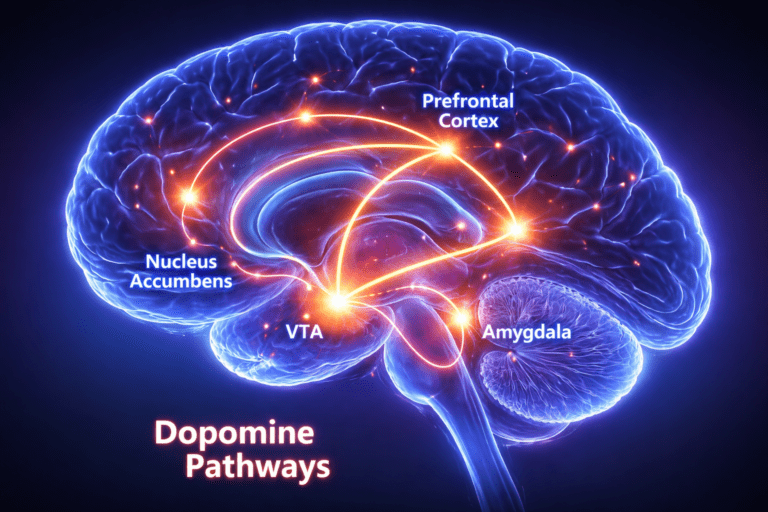
Brain scans show similar patterns. People experience cravings, withdrawal-like symptoms (headaches, irritability, fatigue when they quit), and that loss of control feeling. A paper in the American Journal of Clinical Nutrition pointed out that these foods activate the same reward pathways as addictive drugs, though the intensity might be different.
But here’s what makes it harder than a lot of drug addictions: you can’t just quit food. You have to eat. Multiple times a day. And ultra-processed stuff is everywhere—gas stations, work vending machines, your kid’s school fundraiser, every single social event. Try avoiding alcohol at a party versus avoiding processed food. One is way easier.
Another thing people get wrong is thinking you’re either “addicted” or you’re not. In my experience, it’s more of a spectrum. Some days I can have a small handful of something and be fine. Other days—usually when I’m stressed or tired—it’s like a switch flips and suddenly I’m in the kitchen at 10 PM eating cereal straight from the box.
I guess what I’m trying to say is that the junk food addiction symptoms aren’t always obvious or dramatic. Sometimes it just looks like constantly thinking about snacks, or feeling anxious when you don’t have your favorite foods available, or needing more and more to feel satisfied.
Real-Life Factors That Make This Harder
Let’s talk about why processed food is so addictive beyond just the brain chemistry stuff, because honestly, the science only tells part of the story.
Time and convenience. I cannot overstate this. After working all day, dealing with whatever crisis happened, maybe picking up kids or running errands—the idea of cooking a whole meal from scratch feels impossible. A frozen pizza takes eight minutes. I know what choice I’m making on a Tuesday at 7 PM when I’m already exhausted.
Cost is the other big one that health influencers love to ignore. Ultra-processed foods are cheap. A box of mac and cheese costs a dollar. A bag of chips can be your lunch for two bucks. Fresh vegetables, lean proteins, whole foods? Way more expensive, and if you’re barely making rent, that choice is already made for you.
There was actually research published by the UN Food and Agriculture Organization showing that ultra-processed foods provide the cheapest calories in most developed countries. So when people say “just buy organic vegetables,” they’re ignoring some pretty basic economic reality.
I remember standing in the grocery store once, trying to decide between the nicer bread (whole grain, less additives, $5) versus the regular white bread ($1.50), and I had $43 to last until Friday. That’s not a willpower issue. That’s just math.
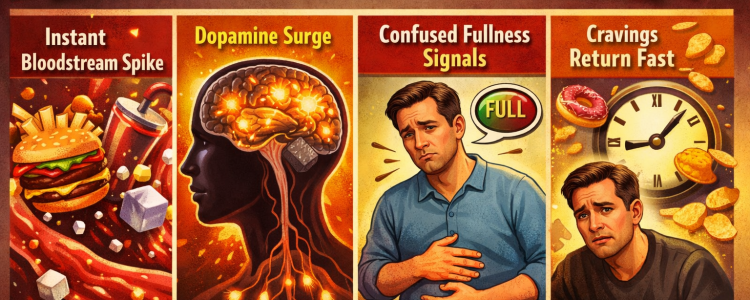
Stress eating is real. When you’re anxious or overwhelmed, your body literally craves quick energy—which means sugar and fat. And processed foods deliver that hit faster and more intensely than whole foods. Your brain learns: feeling bad → eat chips → feel slightly better (temporarily) → repeat. There’s actual neuroscience backing this up—cortisol (stress hormone) affects your food choices, making you crave exactly the stuff that gives you that quick dopamine hit.
Plus there’s the availability factor. You can’t eat what’s not around, but also, you can’t always avoid what is around. Your coworker brings donuts. The break room has a candy bowl. Every checkout line has chocolate bars at eye level. The environment is designed to push these foods at you constantly.
What Actually Helps (And What Probably Won’t)
Okay, so knowing all this, what do you actually do? I’m going to be realistic here because the standard advice—”just meal prep on Sundays!”—doesn’t account for real life.
1. Start with awareness, not elimination.
Before you change anything, just notice your patterns for a few days. When do you reach for processed foods? What triggers it? Boredom, stress, actual hunger, habit?
I started keeping notes on my phone and realized I wasn’t even hungry most of the time—I was just anxious about work stuff. That didn’t instantly fix it, but it helped me understand what I was actually dealing with. Psychologists call this “mindful eating,” though I’m not doing anything fancy—just paying attention.
2. Don’t try to quit everything at once.
This might not work for you, but going cold turkey on all processed foods made me miserable and I’d always “fall off” within a week. It felt like failure every time.
Researchers who study behavior change—there’s a whole field called behavioral psychology around this—consistently find that small, sustainable changes work better than dramatic overhauls. Which kind of annoyed me when I first read it because I wanted a quick fix, but it turns out to be true.
Instead, pick one thing. Maybe it’s swapping regular soda for sparkling water, or having fruit available for when you want something sweet. Small changes you can actually maintain.
3. Add before you subtract.
Instead of focusing on cutting out junk food, try adding one whole food to each meal. Doesn’t have to be fancy. An apple with breakfast. Some baby carrots with lunch (yeah, they’re boring, but they’re also pre-washed and that matters when you’re tired).
What actually happens: when you’re a bit more full from the filling stuff, you naturally want less of the other stuff. Or maybe not. But at least you got some nutrients in. This approach comes from nutrition counselors who work with real people, not Instagram influencers.
4. Keep some processing for practical reasons.
Frozen vegetables are processed. Canned beans are processed. Pre-cut fruit is processed. We’re not talking about those—those are actually helpful when you’re short on time and energy.
The issue is ultra-processed stuff where real food has been broken down and rebuilt. The NOVA classification system (developed by researchers in Brazil, now used internationally) actually breaks down different processing levels. But if buying pre-washed salad means you’ll actually eat salad? Buy the pre-washed salad. Perfect is the enemy of good enough.
5. Plan for your weakest moments.
For me, it’s late night. I know this about myself now. So I try to have something available that’s easier than healthy but not terrible—like popcorn I can air-pop, or frozen fruit, or those cheese stick things.
Is it ideal? No. Is it better than eating half a bag of cookies? Yeah, probably.
6. Address the actual problem.
If you’re stress-eating, you need stress management (which is its own nightmare to figure out, I know). If you’re bored-eating, you need something else to do with your hands. If you’re eating because you’re exhausted and food is the only pleasure you have time for—well, that’s a bigger life problem that “just eat vegetables” doesn’t fix.
The American Psychological Association has published a bunch of stuff about the connection between stress and eating behaviors. Turns out addressing the root cause actually matters more than just trying to white-knuckle your way through cravings.
7. Give yourself some grace on the hard days.
Some days you’re going to eat the processed food. That’s not failure. That’s being human with limited energy living in a world designed to sell you this stuff.
The goal isn’t perfection. It’s maybe making a different choice slightly more often than you did before.
When to See a Doctor (And Why That’s Harder Than It Should Be)
I’m going to be real with you: I put off talking to my doctor about this for way too long because I felt embarrassed. Like, “I can’t stop eating chips” didn’t feel like a legitimate medical concern compared to everything else going on.
But you should actually talk to a healthcare provider if:
- You’re eating in secret or feeling intense shame about your eating
- You’re experiencing physical symptoms (digestive issues, weight changes affecting your health, fatigue)
- Your eating feels completely out of control most of the time
- You’ve tried to change on your own and nothing is working
- You’re having mood issues (depression, anxiety) that seem connected to how you eat
The Diagnostic and Statistical Manual of Mental Disorders (the DSM-5, which is what psychiatrists use) doesn’t officially recognize “food addiction” as a disorder yet, but it does include binge eating disorder and other eating-related conditions. So there are actual diagnostic criteria and treatments available—you just might need to find a provider who takes this seriously.
The challenge is that getting help isn’t always straightforward. Nutritionists aren’t always covered by insurance. Therapy can be expensive. Your regular doctor might just tell you to “eat less and move more,” which, thanks, very helpful.
If cost is an issue, some options: community health centers sometimes offer nutrition counseling on a sliding scale. Some therapists work on reduced fees. The Academy of Nutrition and Dietetics has a “Find an Expert” tool that can help you locate registered dietitians in your area, and you can filter by insurance accepted.
Online support groups are free, though quality varies. Some people find programs like Food Addicts Anonymous helpful (it’s based on the 12-step model), though that approach isn’t for everyone.
The point is, if this is significantly affecting your quality of life, it’s worth addressing, even if the system makes that harder than it should be.
So… Are We Actually Hooked on Junk Food?
I think the answer is yes and no? Which I know is an annoying answer.
Yes, in the sense that ultra-processed foods are genuinely designed to be as appealing and crave-able as possible, and they do affect our brains in ways that can look a lot like addiction. The why can’t I stop eating ultra-processed foods question has real physiological and psychological answers—it’s not just weakness. Multiple studies published in journals like Cell Metabolism and Nature have documented the biological mechanisms behind this.
But also no, in the sense that we’re not helpless. It’s just that the deck is pretty stacked against us between food engineering, cost, convenience, stress, and the fact that we live in bodies that evolved to seek out calorie-dense foods because historically that kept us alive.
The World Health Organization and various public health researchers have started calling for regulation of ultra-processed foods similar to tobacco and alcohol. Whether that’ll actually happen is another story—there’s a lot of money in the processed food industry, and they’re not exactly eager for restrictions.
I guess what I’m trying to say is: if you’re struggling with this, you’re not broken. You’re having a very normal response to an environment that’s kind of set up to create this exact problem. And while that doesn’t make it easier to deal with, it does mean you can stop beating yourself up about it.
Changes happen slowly, imperfectly, with setbacks. Some weeks you’ll do better. Some weeks you won’t. That’s just how it goes.
And maybe that’s okay? I’m still figuring it out myself.
                                                ⚠️ DISCLAIMER:

This article is for informational purposes only and reflects personal experience and general research. It is not medical advice. Always consult a qualified healthcare professional regarding your health concerns.
[…] Healthy portion-controlled meal for sustainable weight loss at home […]
[…] Ultra-Processed Foods & Food Addiction: Are We Hooked on Junk Food? […]
[…] ~Ultra-Processed Foods & Food Addiction: Are We Hooked on Junk Food? […]
[…] ~Ultra-Processed Foods & Food Addiction: Are We Hooked on Junk Food? […]
[…] ~Ultra-Processed Foods & Food Addiction: Are We Hooked on Junk Food? […]
[…] ~Ultra-Processed Foods & Food Addiction: Are We Hooked on Junk Food? […]
[…] ~Ultra-Processed Foods & Food Addiction: Are We Hooked on Junk Food? […]
[…] ~Ultra-Processed Foods & Food Addiction: Are We Hooked on Junk Food? […]
[…] ~Ultra-Processed Foods & Food Addiction: Are We Hooked on Junk Food? […]
[…] ~Ultra-Processed Foods & Food Addiction: Are We Hooked on Junk Food? […]