

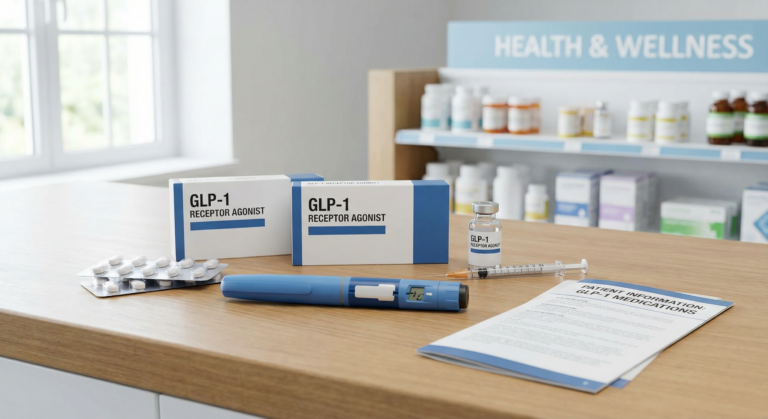
You’ve probably noticed them. The Instagram ads. Your neighbor who suddenly lost thirty pounds and looks weirdly smooth in the face. That hushed conversation at the office where someone mentions their doctor “finally prescribed it.” The Ozempic conversation is happening everywhere now, in pharmacies and PTA meetings and group texts, and depending on who’s talking, these GLP-1 drugs for weight loss are either miracle medications or expensive shortcuts that’ll probably backfire.
I’ll be honest — I’ve been trying to figure out where I land on this for months now.
The thing that gets me is the specific feeling of sitting in a doctor’s office while they pull up your weight chart on their computer. That particular sound the mouse makes clicking through your file. The casual way they rotate the screen toward you like you haven’t been living in this body the whole time. And then, maybe, if you’re lucky and have the right insurance and say the right things about “health concerns,” the prescription conversation starts.
This isn’t about judgment. Not from me, anyway. It’s about trying to understand what’s actually happening here.
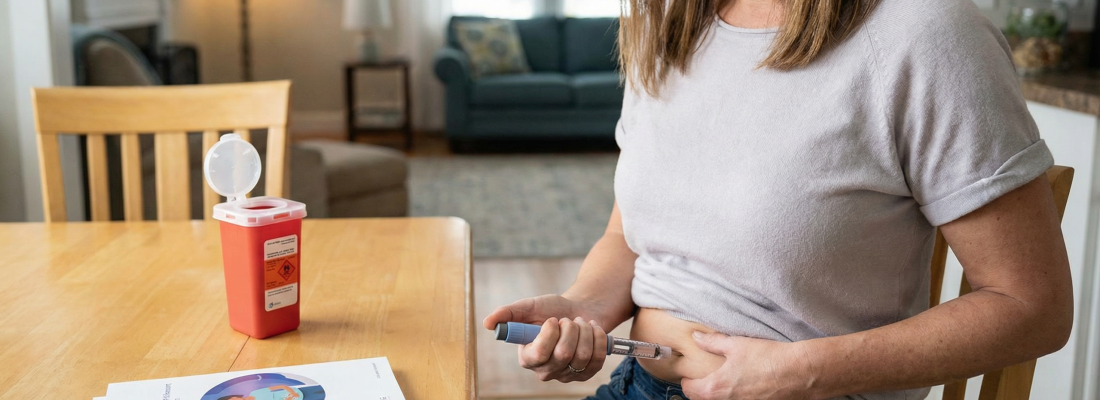
What GLP-1 Drugs Actually Do
GLP-1 drugs — technically called GLP-1 receptor agonists — are medications that mimic a hormone your gut naturally produces when you eat. The full name is glucagon-like peptide-1, which is a mouthful nobody uses in real life. The drugs include semaglutide (sold as Ozempic for diabetes and Wegovy for weight loss), tirzepatide (Mounjaro and Zepbound), and a few others that are less in the spotlight.
Here’s the basic mechanism: They slow down how fast your stomach empties. They signal to your brain that you’re full. They affect insulin and blood sugar. The result, for a lot of people, is that you just… don’t want to eat as much. Not in a jittery, stimulant way. More like food becomes less interesting.
What I’ve noticed, talking to people who’ve actually taken these medications, is that it’s not quite how the headlines make it sound. It’s not “effortless weight loss” — though it is easier than white-knuckling through another diet. It’s more like someone turned down the volume on constant food thoughts. That 3pm vending machine pull. The evening snack parade. The weekend grazing that somehow adds up to a whole extra meal.
Some people describe it as finally having a normal “off switch” around food. Like everyone else apparently has this fullness signal that actually works, and theirs was broken until now.

Where the Conversation Gets Messy
The discourse around these drugs is kind of a disaster, honestly. On one side, you’ve got people acting like anyone who takes them is taking the easy way out, betraying some kind of moral weight-loss purity test. On the other, there’s this cheerleading that feels… I don’t know, like it’s ignoring some pretty legitimate concerns.
What nobody tells you — and this still bugs me — is that we don’t really know what happens when people take these medications for decades. The longest studies we have are maybe five, six years. Which sounds like a long time until you realize we’re talking about potentially taking something for the rest of your life.
Also, the rebound weight gain when people stop is real. Not universal, but common enough that it’s not some rare side effect buried in fine print. Studies suggest most people regain a significant portion of the weight within a year of stopping. Which makes sense when you think about it — if the drug was doing the work of appetite regulation, and you stop the drug, your appetite comes back. Often with a vengeance.
The other thing people get wrong is thinking this is cosmetic. Or frivolous. The clinical reality is that obesity (a term I know people have complicated feelings about, myself included) is linked to serious health conditions. Type 2 diabetes. Heart disease. Joint problems. Sleep apnea. If someone’s doctor recommends a GLP-1 drug, it’s usually not about fitting into skinny jeans.
But. And this is a big but. We also live in a culture that treats weight loss as a moral achievement and thinness as health, which isn’t always true. Sometimes these conversations get all tangled up, and it’s hard to separate medical benefit from cultural pressure.
The Very American Economics of All This
Here’s where it gets especially messy in the US: insurance coverage for GLP-1 drugs is wildly inconsistent. If you have Type 2 diabetes, your insurance might cover Ozempic. If you need it specifically for weight loss, they might only cover Wegovy — which is the exact same drug at a slightly higher dose — if you meet very specific criteria. And even then, your copay could be $25 or $500 depending on your plan.
Without insurance? We’re talking $900 to $1,300 per month. Every month. Forever, potentially.
I’ve watched people do the math in real-time. That specific look that crosses someone’s face when they realize this medication that actually works for them costs more than their car payment. The quiet calculation of what they’d have to give up. The particular dread of opening an Explanation of Benefits letter and seeing that your claim was denied for “not medically necessary.”
Meanwhile, there’s a whole online economy of people getting prescriptions through telehealth companies, using Canadian pharmacies, splitting doses, or trying the diabetes version off-label for weight loss. Some of it’s legit. Some of it’s dicey. All of it points to how broken our healthcare pricing is.
The American food landscape doesn’t help either. We’re surrounded by hyper-palatable, calorie-dense food that’s engineered to override our fullness signals. Drive-thru on every corner. Office birthday cakes. Gas station snacks. Portion sizes that would horrify most other countries. And then we medicalize the predictable result and charge people a mortgage payment to fix it.
It’s honestly kind of dystopian when you step back and look at it.
What the Research Actually Shows
Let me try to cut through the noise with what the data actually says, according to sources like the Mayo Clinic and recent clinical trials:
Weight loss results: In clinical trials, people taking semaglutide (Wegovy) lost an average of 15% of their body weight over 68 weeks. Tirzepatide showed even higher results in some studies — up to 20% average weight loss. That’s significant. For someone weighing 250 pounds, we’re talking 35-50 pounds.
But. Those are averages. Some people lose much more. Some lose barely anything. Some can’t tolerate the side effects.
Side effects are common: Nausea, vomiting, diarrhea, constipation. Usually worst in the first few weeks or when increasing the dose. For some people, it gets better. For others, it doesn’t. There are also concerns about gallbladder issues, pancreatitis risk, and a potential (though debated) link to thyroid tumors in animal studies.
The metabolic benefits are real: Beyond weight loss, these drugs improve blood sugar control, reduce cardiovascular risk in some populations, and may help with fatty liver disease. These aren’t minor things.
Muscle loss happens too: When you lose weight quickly, you lose muscle along with fat. More so than with slower weight loss. Which matters for long-term metabolic health and aging well.
If You’re Actually Considering This (Practical Reality Check)

Look, I’m not here to tell you what to do. But if you’re thinking about asking your doctor about GLP-1 drugs for weight loss, here’s what actually happens versus what you might imagine:
1. The conversation with your doctor might be awkward. They might be enthusiastic. They might be hesitant. They might immediately talk about lifestyle changes first, which — I realize this sounds defensive — isn’t necessarily them judging you. It’s partly covering their bases with insurance requirements.
2. Insurance might say no. Multiple times. Be prepared to appeal. Get your doctor to write letters. Use phrases like “medically necessary” and reference specific health conditions. It’s exhausting. You’ll need to advocate for yourself harder than feels fair.
3. The first few weeks often suck. The nausea is real. You might need to completely change how you eat — smaller portions, blander foods, eating slowly. What the advice column says: “Start the medication and follow a balanced diet.” What actually happens: You eat three bites of chicken, feel uncomfortably full for six hours, then try to force down a protein shake because you know you need to eat something.
4. You’ll need to rethink your relationship with food. This sounds like therapy-speak, but I mean it practically. If you’ve been using food for comfort, boredom, stress, celebration — and suddenly food doesn’t hit the same way — you’ll need other coping mechanisms. Nobody really prepares you for that part.
5. Plan for the long-term cost. Both money and logistics. Monthly injections. Prescription refills. Prior authorizations that expire. Pharmacy shortages (which have been a real problem). If you can’t afford it indefinitely, have a realistic plan for what happens when you stop.
6. Combine it with other changes (yeah, I know). The research is pretty clear that people who also adjust their eating patterns and increase movement maintain results better. You don’t have to become a gym person or meal prep obsessive. But completely relying on the medication alone tends to end poorly when you eventually stop.
7. Monitor yourself. Keep track of side effects. Blood work. How you’re actually feeling, not just what the scale says. These are powerful medications, not cosmetic injections.
When to Actually Talk to a Doctor

Standard advice incoming, but it matters: You should talk to your doctor about GLP-1 drugs if:
- Your BMI is over 30, or over 27 with weight-related health conditions
- You’ve tried other approaches and they haven’t worked long-term
- You have obesity-related health issues (prediabetes, high blood pressure, sleep apnea, joint problems)
- You’re willing to commit to regular monitoring and follow-up
Red flags to discuss immediately if you’re already taking these medications:
- Severe abdominal pain (could indicate pancreatitis or gallbladder issues)
- Persistent vomiting where you can’t keep liquids down
- Vision changes
- Signs of thyroid issues (lump in neck, hoarseness, trouble swallowing)
- Rapid heartbeat or extreme fatigue
Personal admission time: I’ve put off doctor’s appointments for things that bothered me because I didn’t want to be told it was just my weight. I know I’m not alone in that. But these medications have serious risks, and you need actual medical supervision. Not a telehealth company that’ll prescribe to anyone with a credit card, but a real provider who’ll see you regularly.
So… Cure or Compromise?
I realize I’ve spent 1,800 words essentially saying “it’s complicated,” which probably isn’t the clean answer anyone wants.
Here’s where I land: GLP-1 drugs for weight loss are powerful tools that genuinely help some people improve their health. They’re not magic, they’re not without risk, and they’re definitely not a simple fix for a complex problem. They’re also wildly expensive in a country that’s made it nearly impossible to maintain a healthy weight through “lifestyle” alone.
The compromise part is real. You’re trading one set of challenges (the physical and mental toll of obesity, the health risks, the daily difficulty) for another set (cost, side effects, long-term unknowns, potential dependency on medication). Only you can decide if that trade makes sense for your life.
What I keep coming back to is this: We don’t judge people for taking blood pressure medication or statins. We’ve decided those chronic conditions deserve pharmaceutical treatment. The resistance to treating obesity the same way is partly valid concern about long-term effects and overmedicalization… and partly just weight stigma wearing a lab coat.
I don’t know if these drugs will still be the standard of care in ten years. I don’t know if you’ll regret trying them or regret not trying them. I don’t even know if I’ve been helpful here, or just thoroughly muddied waters that were already pretty murky.
What I do know: This decision deserves more than Instagram advice and more than medical paternalism. It deserves honest information, real cost transparency, and acknowledgment that we’re all just trying to live in these bodies as well as we can.
That’s the best I’ve got.
Medical Disclaimer
This article is for informational purposes only and does not constitute medical advice. The author is not a medical professional. GLP-1 medications are prescription drugs requiring physician supervision. Individual results, side effects, and health outcomes vary significantly. Always consult your doctor before starting, stopping, or changing any medication. Seek immediate medical attention for severe side effects or emergencies. Insurance coverage, costs, and FDA approvals are subject to change. The information here does not replace professional medical consultation.