

Why Most People Ignore Early Health Warning Signs — And What It Really Costs Us
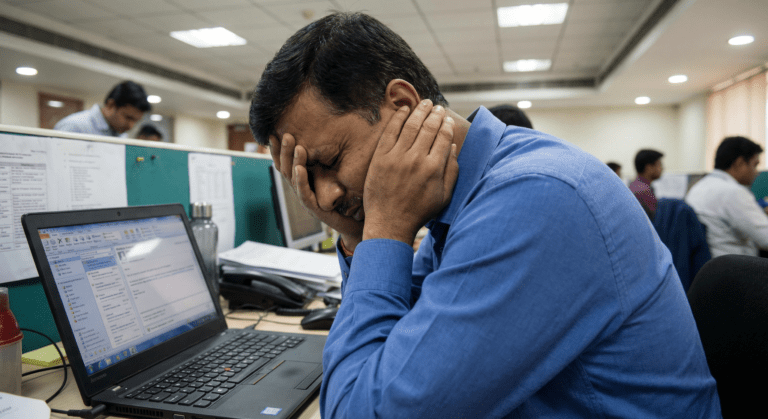
That Familiar Feeling Nobody Admits To
You know that moment. Around 3:30 pm, after lunch has settled but before the evening chai break. There’s a heaviness behind your eyes. A dull ache that wasn’t there two years ago. Your neck feels stiff — not painful exactly, just… present. You roll your shoulders, take a sip of water, and continue typing.
You noticed it. You always notice.
And then you do what I’ve done, what most of us do — you file it away under “probably nothing” and move on with your day. There’s a presentation due. The kids need picking up. Your mother called twice about something urgent that probably isn’t.
See, the thing about early health warning signs is this: they rarely arrive screaming. They whisper. A slight breathlessness climbing two flights of stairs. Digestion that’s become… temperamental. Sleep that leaves you tired. Energy that dips earlier than it used to.
According to ICMR data, nearly 65% of Indians with chronic conditions like diabetes or hypertension were unaware of their condition until it progressed significantly. Not because they felt nothing. Because what they felt seemed too small to matter.
I’ll say this upfront: this article isn’t medical advice. I’m not a doctor. If something feels seriously wrong, please see one. What I am is someone who’s spent years observing — in myself, in family, in friends — how we negotiate with our own bodies. And usually lose.
What’s Actually Happening When We Look Away
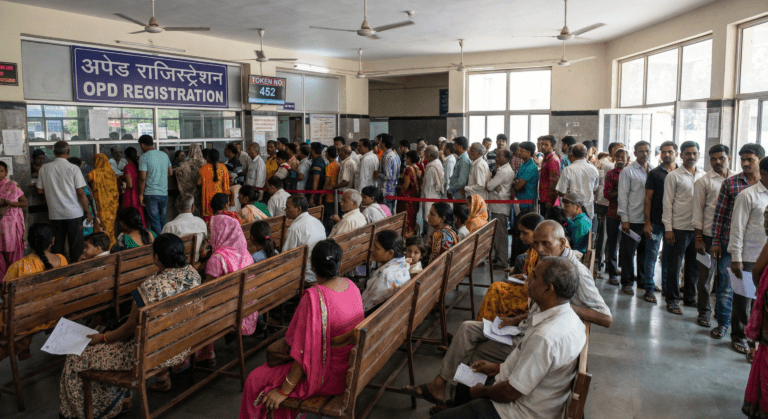
Here’s something I’ve noticed again and again, sitting in hospital waiting rooms with relatives, talking to friends after their diagnoses, reflecting on my own delays: the people who eventually face something serious almost always say the same thing.
“I knew something was off. I just didn’t think it was that.”
This isn’t hindsight bias. It’s a pattern. A very human one.
Our bodies are remarkably good at sending symptoms we shouldn’t ignore. The signals start soft — unexplained fatigue, a recurring ache, slightly irregular bowel movements, skin changes, hair thinning that seems sudden. These signs of health problems aren’t dramatic. They’re polite, almost. Easy to explain away.
What happens next is fascinating and terrible in equal measure.
When we don’t investigate body warning signs, our system adapts. It works around the problem. We start believing that feeling exhausted by 6 pm is normal. That needing antacids after every heavy meal is just how things are now. That waking up with joint stiffness every morning is “an age thing.”
Our baseline shifts. Slowly. Quietly. The abnormal becomes our new normal.
There’s a psychological term for this — normalcy bias. We expect life to continue roughly as it has, so we interpret new symptoms through old frameworks. “Must be the pollution.” “Probably just work tension.” “Everyone my age has this problem.”
The National Health Profile 2023 indicates that India’s burden of non-communicable diseases (NCDs) — diabetes, heart disease, hypertension — has increased by nearly 25% in the last decade. Many of these conditions send early warning signs months or years before diagnosis. We just become experts at not seeing them.
What People Get Fundamentally Wrong
There’s a common belief that serious illness announces itself dramatically. Clutching your chest. Collapsing suddenly. Something unmistakable and cinematic.
Sometimes, yes. More often, no.
What nobody tells you — and this still irritates me every time I think about it — is that many serious conditions begin with symptoms that could be anything. Or nothing.
Persistent fatigue? Could be thyroid dysfunction, early diabetes, anaemia, sleep apnoea, vitamin D deficiency, clinical depression, or just an unreasonable workload. A recurring stomach issue? Stress, poor diet, IBS, H. pylori infection, or something that needs a colonoscopy.
The vagueness is genuinely maddening.
You finally make time for a doctor visit. You describe something unclear — “I’ve been feeling off lately” — and get told to “monitor it” or “reduce stress.” You walk out having spent ₹800, unsure if you’ve wasted money or missed something critical. You don’t go back for another year.
I’ve done this. Multiple times.
Another misconception about health symptoms that costs us: assuming young age is protection. I’ve watched friends in their early thirties dismiss warning signs because “serious health problems are for older people.” Meanwhile, AIIMS Delhi reports increasingly seeing Type 2 diabetes, fatty liver disease, and hypertension in the 28-40 age bracket. The average age of first heart attack in India has dropped to 50 — nearly a decade younger than Western countries.
There’s also this belief that symptoms must be constant to matter. They often aren’t. That chest tightness appearing once a week during stressful meetings? Still worth investigating. The tingling in your feet that comes and goes? Same. Intermittent warning signs of illness are still warning signs.
And perhaps the most dangerous misconception: “If it was serious, it would get worse.”
Sometimes serious things plateau. Sometimes they hide. Sometimes they’re silently progressing while you feel exactly the same.
Why Ignoring Health Symptoms Hits Different in India
Living in India adds very specific layers to this problem. Layers that someone sitting in London or New York wouldn’t quite understand.
The Access Problem
If you’re in Mumbai, Delhi, or Bangalore with decent employer insurance or personal coverage, getting a health checkup is straightforward. Expensive, inconvenient, but doable. Book at Metropolis or Dr Lal PathLabs, get your reports on email, consult a specialist.
If you’re in a Tier-2 or Tier-3 town, or dependent on government healthcare, the equation changes entirely. A basic checkup might mean navigating overcrowded OPDs, four-hour waits, and doctors who have exactly three minutes per patient because there are sixty more outside.
The Ayushman Bharat scheme has expanded coverage for hospitalization, yes. But preventive healthcare — catching problems early, before hospitalization becomes necessary — remains largely out-of-pocket for most Indians.
The Money Reality
Let’s be honest about costs. A comprehensive health screening at a private diagnostic chain runs ₹3,500 to ₹18,000 depending on what’s included. Specialist consultations: ₹600 to ₹2,500. Follow-up tests, imaging, maybe a second opinion — suddenly you’ve spent ₹15,000-20,000 on something that might be nothing.
For a family where that’s a significant chunk of monthly income, the calculus becomes brutal. Investigate a vague symptom, or pay the school fees?
I’m not judging anyone who chooses the school fees. I understand it completely.

The Family Chaos Factor
In many Indian households — particularly joint families or those where parents live nearby — admitting you’re feeling unwell invites an avalanche of opinions, home remedies, and contradictory advice.
There’s that uncle who recommends kadha and pranayama for literally everything, from headaches to chest pain. The aunt who has a “very good homeopathy doctor” who cured her neighbour’s cousin. Parents who oscillate wildly between “you youngsters take too much tension, nothing is wrong” and “get an MRI immediately, my friend’s son had similar symptoms and it was very serious.”
The emotional labour of managing family concern sometimes feels harder than managing the symptom itself. So you say nothing. You wait.
The Work Culture Trap
India’s urban work culture actively discourages preventive care. Taking a half-day off for a checkup — not sick leave, just prevention — still feels like a luxury. The pressure to be present, responsive, available, especially in private-sector jobs with their unspoken expectations, makes health feel like something to address “later.”
“I’ll do a full checkup after this project ends.” “Once things settle down at work.” “Maybe in January.”
Things don’t settle. January never comes.
What Actually Helps — Honestly, Realistically

I realise I’m now entering advice territory, and you’ve probably read a hundred articles telling you to “prioritise your health.” So I’ll try to be specific. Practical. Aware of real constraints.
Start a Symptom Log (Even a Lazy One)
When you notice something — fatigue, recurring pain, digestive weirdness, sleep issues — note it somewhere. Phone notes app. WhatsApp message to yourself. Anywhere.
Format: Date. What you felt. How long. What made it better or worse.
This sounds tedious, but here’s why it matters: doctors respond very differently to “I’ve been having this headache for three weeks, usually between 4-6 pm, worse when I skip lunch, not helped by Crocin” versus “I’ve been getting headaches.”
The first gets investigated. The second gets dismissed.
Stop Waiting for Symptoms to Become Unbearable
This is the mindset shift that matters most for early diagnosis of health issues.
You don’t need to be in agony to deserve investigation. You don’t need to be unable to function. Early health warning signs are called “early” for a reason — they’re the window when intervention is simpler, cheaper, less invasive.
Catching something at stage 1 versus stage 3 isn’t just about survival statistics. It’s about treatment intensity, side effects, recovery time, financial impact, quality of life.
Use Affordable Diagnostics Strategically
Places like Thyrocare, Redcliffe Labs, or local NABL-accredited labs regularly offer packages for basic health screening — lipid profile, fasting blood sugar, HbA1c, liver function, kidney function, CBC, vitamin levels.
During discount periods (they happen often, especially on health days), a comprehensive panel might cost ₹1,500-3,000. Not cheap for everyone. But cheaper than discovering problems later.
If cost is a barrier, prioritize: basic blood sugar, blood pressure, and lipid profile. These three catch a significant percentage of lifestyle diseases early.
Find One Doctor You Can Actually Talk To
This is harder than any article admits.
India’s rushed clinical settings — 5-minute consultations, assembly-line patient processing — make genuine conversation nearly impossible. But having one general physician who knows your baseline, even if you see them once or twice a year, makes a real difference.
Worth paying ₹800-1,500 for a 15-minute consultation where you can actually describe what you’re experiencing, rather than ₹400 for three minutes of rushed dismissal.
Ask friends for recommendations. Check Practo reviews (with skepticism). It might take two or three tries to find someone who listens.
Stop Self-Diagnosing on Google, But Do Educate Yourself
There’s a middle path between 2 AM anxiety spirals and willful ignorance.
If you’re experiencing something, reading about possible causes from reliable sources (Mayo Clinic, NHS, AIIMS patient education) can help you ask better questions. Just don’t conclude you have cancer because a forum post matched your symptoms.
Here’s what actually happens: you Google a symptom at midnight. You find seventeen possible conditions, three of them terrifying. You either panic or dismiss everything. Neither helps.
Better approach: note your symptoms for a week, then read. Context helps you filter information.
Accept That Preventive Care Feels Like Wasted Money (Until It Isn’t)
The doctor says “get your HbA1c tested annually.” You think, “I feel fine. Why spend ₹450?” You skip it. Three years later, you’re diagnosed with Type 2 diabetes that’s been silently progressing, now requiring medication and lifestyle overhaul.
I’ve watched this exact sequence in my own family. More than once.
The frustrating truth about importance of health checkups is this: the spending only feels valuable in retrospect. In the moment, it feels like paying for peace of mind you probably don’t need.
But peace of mind has value too. And sometimes, it catches something.
Take Persistent Symptoms Seriously, Even Mild Ones
Persistent is the key word for symptoms to not ignore.
A headache that lasts a day is probably nothing. A headache that returns regularly for a month — especially if the pattern is new or different — warrants attention.
Same logic applies to fatigue, digestive changes, unexplained aches, skin changes, mood shifts, sleep disruption. Duration and pattern matter more than intensity.
When You Really, Truly Shouldn’t Wait — Red Flags
Some warning signs of illness demand immediate attention. This isn’t alarmism — it’s recognising when to see a doctor without delay.
Seek medical help immediately if you experience:
- Chest pain, pressure, or tightness — especially with breathlessness, sweating, or pain radiating to arm, jaw, or back
- Sudden severe headache — unlike anything you’ve experienced, often described as “thunderclap”
- Unexplained rapid weight loss — more than 5% of body weight in a month without trying
- Blood where it shouldn’t be — in stool, urine, vomit, or cough
- New lumps or growths — especially those that persist or grow over weeks
- Sudden weakness, numbness, or confusion — particularly on one side of body
- Vision changes — sudden blurring, double vision, or partial loss
- Persistent fever — more than 2 weeks without clear cause
- Severe abdominal pain — especially if sudden and intense
- Difficulty breathing — at rest or with minimal exertion
These aren’t “wait and monitor” situations. These are “go to a hospital now” situations.
I’ll be honest here — genuinely honest, not performatively. I ignored a symptom for nearly two years. A persistent dry cough that I attributed to Bangalore’s construction dust, seasonal allergies, post-Diwali air quality, acid reflux from stress eating. Always an explanation. Always a reason to wait.
When I finally got it checked — only because a friend insisted — it turned out to be something that needed treatment. Something that would have been simpler to address eighteen months earlier.
Looking back, the denial is embarrassing and obvious. I was bargaining with myself because I didn’t want to deal with reality. Because dealing with reality meant admitting something might be wrong.
I suspect many of us are bargaining similarly. About something. Right now.
Living With Uncertainty — Because That’s What This Is
I’m aware of what I’ve just done — written two thousand words essentially saying “pay attention to your body and see a doctor when needed.” This isn’t groundbreaking. You probably knew most of this already.
But knowing and doing are separated by a canyon filled with work deadlines, family obligations, financial stress, and the very human tendency to believe that we’re the exception. That the warning sign is nothing. That we’ll deal with it later.
What I’ve tried to do is not give you new information but perhaps a new permission. Permission to take your own discomfort seriously before it becomes undeniable. Permission to spend money on investigation even when you might be fine. Permission to override the voice that says “don’t make a fuss.”
You probably know more about what’s happening in your body than you’re allowing yourself to admit.
The gap between noticing an early health warning sign and actually doing something about it — that quiet space where we negotiate, postpone, explain away — is where things go wrong. Not dramatically. Not in one moment. Gradually. Silently. Until suddenly it’s not silent anymore.
Maybe start smaller than you think necessary. Notice what you’ve been noticing. Write it down. Make one appointment.
Not because I’m telling you to. Because something in you has probably been suggesting it for a while.
Quick Reference: Symptoms Worth Noting, Not Dismissing
Track these if they persist beyond 2-3 weeks:
- Unusual fatigue that sleep doesn’t fix
- Digestive changes — new constipation, diarrhea, bloating
- Unexplained aches or pains, especially if localized
- Changes in skin — new marks, colour changes, slow-healing wounds
- Hair or nail changes — sudden thinning, brittleness
- Sleep disruption — difficulty falling asleep, staying asleep, or feeling rested
- Shortness of breath during normal activities
- Appetite changes — loss of interest in food or unusual cravings
- Mood shifts — persistent low mood, anxiety, irritability without clear cause
- Urinary changes — frequency, colour, discomfort
- Menstrual changes — irregular cycles, unusual pain, heavy bleeding
- Unexplained weight changes — gain or loss without lifestyle changes
- Night sweats — waking up drenched without obvious reason
These aren’t emergencies. But they’re worth a conversation with a doctor rather than another month of waiting and wondering.
Medical Disclaimer
This article is for informational purposes only and is not a substitute for professional medical advice, diagnosis, or treatment. The author is not a medical professional. Always consult a qualified healthcare provider with questions about any medical condition. Never disregard professional medical advice or delay seeking it because of something you’ve read here. If you think you may have a medical emergency, call your doctor or emergency services immediately.
[…] […]
[…] […]