

The Body Wasn’t Designed for Modern Schedules. We forced it anyway.

“Why Constant Fatigue Is a Biological Problem — Not a Personal Failure.”
Sarah, a marketing director in Austin, sleeps 7.5 hours a night. She exercises four times a week. She takes vitamins and limits sugar.
Yet she wakes up exhausted, relies on three cups of coffee to function, crashes hard at 3 PM, and feels inexplicably wired at 10 PM.
“What’s wrong with me?” she asked her doctor.
The answer: absolutely nothing.
Her body is doing exactly what it’s designed to do — which is precisely the problem.
The human body was never designed for modern American schedules.
Not the late nights under artificial light.
Not the 6 AM alarms overriding natural wake times.
Not the constant context-switching between Slack, Zoom, emails, and deliverables.
And the cost of that evolutionary mismatch is showing up as chronic fatigue, poor sleep, metabolic dysfunction, and burnout that rest alone cannot resolve.
According to the American Psychological Association’s 2023 Work and Well-being Survey, 77% of American workers report experiencing burnout, with irregular schedules cited as a primary contributor.
This isn’t a personal failing.
It’s a design flaw in how we live.
Modern Schedules Break Biological Rhythm
The body doesn’t run on clocks or calendar alerts.
It runs on circadian rhythms — internal 24-hour cycles that regulate:
- Energy production
- Hormone release (cortisol, melatonin, insulin)
- Digestion and metabolism
- Immune function
- Cognitive performance
Dr. Satchin Panda, a leading circadian biology researcher at the Salk Institute, puts it plainly:
“Your organs have clocks. When you eat, sleep, or work at irregular times, you’re asking your liver to do one thing while your brain does another. That creates internal conflict.”
Yet modern American life systematically disrupts these rhythms:
- Irregular sleep schedules (weekday vs. weekend)
- Late-night screen exposure (blue light suppresses melatonin by up to 50%)
- Meals at inconsistent times (dinner at 6 PM one night, 10 PM the next)
- Artificial lighting after sunset (your brain thinks it’s still daytime)
- Mental stimulation until bedtime (emails, news, social media)
Even when total sleep hours seem adequate, the timing is chaotic.
A 2022 study published in Diabetes Care found that people with irregular sleep patterns — even if they slept 7-8 hours — had double the risk of metabolic syndrome compared to those with consistent schedules.
The result: circadian disruption — a key driver of persistent fatigue, brain fog, low motivation, poor sleep quality, and weight gain.
This isn’t laziness.
It’s biology responding to rhythm loss.

Why Energy Feels Like a Rollercoaster
Does this sound familiar?
✓ Alert and focused for an hour
✓ Suddenly crashing without warning
✓ Productive in the morning, useless by 2 PM
✓ Exhausted all day, but wide awake at 11 PM
That unpredictability isn’t random.
It’s a dysregulated nervous system stuck in constant flux between:
Sympathetic activation (alert mode)
↕
Parasympathetic suppression (recovery mode)
The problem: there’s no consistent rhythm to settle into.
Dr. Andrew Huberman, Stanford neuroscientist and host of the Huberman Lab podcast, explains:
“When your nervous system never knows when it’s safe to fully relax, energy production becomes inefficient. The body starts conserving resources as a protective mechanism.”
Translation: fatigue becomes your baseline.
According to the CDC, 35.2% of American adults sleep fewer than 7 hours per night — but even those who hit 7-8 hours often report feeling unrefreshed.
Why?
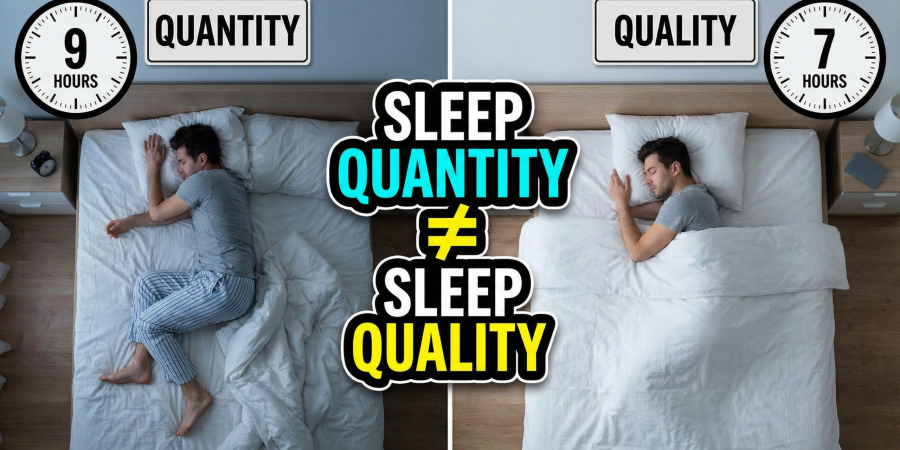
Sleep Quantity ≠ Sleep Quality
One of the most frustrating experiences is sleeping “enough” but waking up feeling like you barely rested.
Modern schedules sabotage the architecture of sleep:
What happens when you:
📱 Look at screens before bed
→ Blue light suppresses melatonin production
→ Sleep onset is delayed
→ Deep sleep is reduced
🍕 Eat late (within 3 hours of bedtime)
→ Digestion interferes with overnight repair
→ Blood sugar spikes disrupt sleep cycles
→ Growth hormone release is impaired
🧠 Stay mentally stimulated until lights out
→ Cortisol remains elevated
→ Brain stays in alert mode
→ You get more light sleep, less restorative deep sleep
A 2021 study in Sleep Medicine Reviews found that inconsistent sleep timing (varying bedtimes by just 90 minutes) reduces sleep quality markers equivalent to losing an entire hour of sleep.
This is why you can sleep 8 hours and still wake up tired.
The Hidden Cost of Constant Alertness
American work culture celebrates responsiveness:
- Emails answered within minutes
- Slack messages during dinner
- “Always on” availability
- Notifications at all hours
But the body doesn’t distinguish between actual danger and a deadline.
Your nervous system interprets constant responsiveness as low-level threat.
The biological response:
✗ Cortisol and adrenaline stay elevated
✗ Inflammation increases
✗ Energy diverts away from repair and restoration
✗ Immune function declines
Over time, this creates:
- Physical heaviness
- Mental fog
- Low stamina
- Emotional flatness
- Reduced stress resilience
A Harvard Business Review study found that the average American checks their phone 96 times per day — roughly once every 10 minutes during waking hours.
Each interruption triggers a micro stress-response.
Rest helps — but it cannot fully compensate for a system that never exits alert mode.

Why “Time Management” Advice Misses the Point
Most productivity advice tells you to:
- Optimize your morning routine
- Batch your tasks
- Use time-blocking
- Wake up earlier
But here’s the problem:
A perfectly organized schedule that ignores human biology still produces fatigue.
You can’t productivity-hack your way out of a biological mismatch.
Efficiency ≠ Sustainability
The real question isn’t “How can I do more?”
It’s “How can I work with my body instead of against it?”
What Actually Works: Evidence-Based Solutions
Here’s the good news: you don’t need to quit your job or move off the grid.
Small adjustments to honor biological rhythms can create significant change.
☀️ Anchor Your Circadian Rhythm
Get morning sunlight within 30 minutes of waking
→ Triggers cortisol production (good in the morning)
→ Sets your internal clock
→ Improves nighttime melatonin release
Aim for: 10-30 minutes outdoors (even on cloudy days)
Why it works: A 2020 study in Journal of Affective Disorders found morning light exposure reduced fatigue symptoms by 40%
🕐 Create Consistent Sleep-Wake Times
Go to bed and wake up at the same time every day — yes, weekends too
Even a 30-minute variation can disrupt circadian alignment.
Pro tip: If you can only control one thing, make it your wake time. Your body will gradually adjust bedtime naturally.
🌙 Implement a “Digital Sunset”
Dim lights and reduce screen exposure 2-3 hours before bed
Practical swaps:
- Use night mode/blue light filters after 7 PM
- Switch to lamps instead of overhead lights
- Read physical books instead of scrolling
Data point: Participants in a 2019 Sleep Health study who used blue light blockers for 2 hours before bed increased melatonin production by 58% and reported better sleep quality.
🍽️ Time Your Meals Consistently
Eat within a consistent 10-12 hour window each day
Example:
First meal: 8 AM
Last meal: 6 PM
Why: Your digestive system has its own circadian clock. Irregular eating confuses metabolic hormones.
Dr. Panda’s research shows that time-restricted eating (even without calorie changes) improves energy, sleep quality, and metabolic markers.
🧘 Build “Recovery Blocks” Into Your Day
Schedule 10-15 minute breaks where you completely disconnect
Not scrolling.
Not multitasking.
Try:
- Walking outside
- Sitting quietly
- Breathing exercises (box breathing: 4 seconds in, 4 hold, 4 out, 4 hold)
Science: A Stanford study found that brief “non-stimulation” breaks reduced afternoon fatigue and improved focus by 30%.
🔕 Protect Your Nervous System
Turn off non-essential notifications
Every ping = micro-stress response
Try:
- Batch email checks (9 AM, 1 PM, 4 PM)
- Use “Do Not Disturb” during focus work
- Remove work apps from your phone (or use app timers)
American context: The average US worker is interrupted 56 times per day. Each interruption can take 23 minutes to recover from (University of California, Irvine).
⚡ Honor Your Natural Energy Peaks
Schedule demanding work during your biological prime time
For most people:
- Peak focus: 9-11 AM
- Energy dip: 2-4 PM (this is normal!)
- Second wind: 5-7 PM
Instead of fighting the afternoon slump, work with it:
- Schedule easier tasks or breaks during the dip
- Save creative/strategic work for peak hours
This Isn’t About Perfection
You don’t need to implement all of these.
Start with one or two that feel doable.
The goal isn’t to overhaul your life overnight.
It’s to create small points of biological alignment in an otherwise chaotic schedule.
The Bigger Truth About Fatigue
If you’ve felt exhausted despite “doing everything right,” this is your permission to stop blaming yourself.
Your body isn’t broken.
You’re not lazy.
You’re not weak.
You’re a biological organism trying to function in an environment your physiology wasn’t designed for.
Modern American work culture asks you to:
- Override natural sleep-wake cycles
- Respond instantly and continuously
- Ignore hunger and fatigue signals
- Sacrifice recovery for productivity
And then blames you when your body protests.
That’s not a you problem.
That’s a system problem.
Recognizing this doesn’t mean giving up.
It means changing the question.
From:
“Why can’t I handle this?”
To:
“How can I design my day to work with my biology, not against it?”
Final Thought
Fatigue is feedback.
It’s your body saying:
“This rhythm doesn’t match my design.”
You can ignore that signal — millions do.
Or you can start listening.
Not perfectly.
Not all at once.
But intentionally.
Because sustainable energy in the modern world doesn’t come from pushing harder.
It comes from aligning smarter.
Take One Step Today
Pick one micro-change from this list:
- ☐ Get 10 minutes of morning sunlight tomorrow
- ☐ Set a consistent wake time (including weekends)
- ☐ Turn off non-essential notifications for one day
- ☐ Eat your last meal 3 hours before bed tonight
- ☐ Dim your lights after 8 PM
Small shifts in rhythm create compounding returns.
Your body is ready to work with you.
The question is: are you ready to listen?
Sources:
- American Psychological Association. (2023). Work and Well-Being Survey
- Panda, S. (2018). The Circadian Code. Rodale Books
- Huberman Lab Podcast, Stanford University
- Diabetes Care, 2022; Sleep Medicine Reviews, 2021; Journal of Affective Disorders, 2020
- Harvard Business Review; University of California, Irvine (interruption studies)
[…] […]