

Why Anxiety Is So Common Today—And What Actually Helps
It starts somewhere around 3am. Not always, but often enough that you recognise it now.
That particular kind of wakefulness where your eyes open and your brain immediately lurches into gear, running through tomorrow’s meeting, last week’s conversation you can’t quite shake, the bill you forgot, the text you should have sent. Your chest feels tight. Not dramatically so. Just… present. Like someone’s resting their hand there.
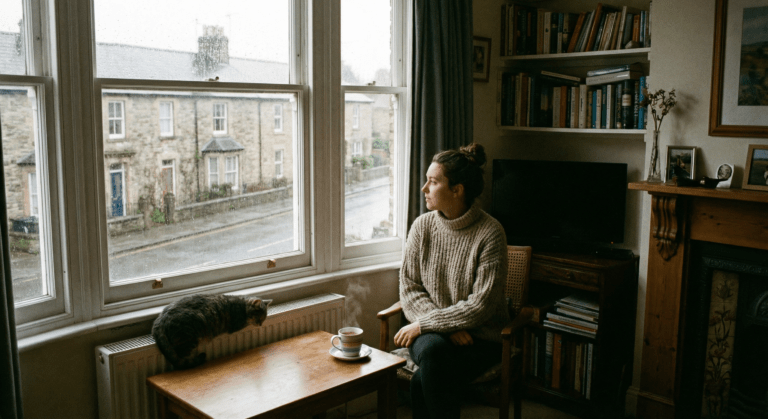
If this sounds familiar, you’re in considerable company. Why anxiety is so common today isn’t mysterious once you start looking properly — though the answers are more layered than most wellness articles admit. We’re living through something genuinely unprecedented in terms of how much information, choice, and low-level threat our brains are trying to process. And our nervous systems, bless them, haven’t caught up.
I’m not a doctor. I’m someone in their early forties who’s spent a fair amount of time managing my own brain, reading the research, and watching what actually works versus what sounds good in theory. This isn’t medical advice. It’s an honest look at what’s happening and what might help.
What’s Actually Happening in Our Brains?
Here’s the short version: our threat-detection system is magnificent at keeping us alive and absolutely terrible at modern life.
The amygdala — that small, almond-shaped part of your brain responsible for processing fear — doesn’t distinguish terribly well between a sabre-toothed tiger and an aggressive email from your line manager. Both register as danger. Both trigger the cascade: cortisol, adrenaline, racing heart, shallow breathing.
The difference is that the tiger encounter would be over in minutes. The email? You’ll think about that for days. Possibly while you’re trying to sleep. Possibly at 3am.
What I’ve noticed, again and again, is that most anxious people aren’t particularly irrational. They’re often quite sharp — good at pattern recognition, good at anticipating problems. The issue isn’t faulty thinking. It’s a nervous system that’s calibrated for a world that no longer exists, stuck in a mode it can’t quite switch off.
Chronic stress compounds this. Each unresolved worry adds to the baseline. Your nervous system stops returning to rest properly. You start to feel like you’re always slightly braced for something.
This isn’t weakness. It’s biology doing what biology does, just in the wrong context.
Lorem ipsum dolor sit amet, consectetur adipiscing elit. Ut elit tellus, luctus nec ullamcorper mattis, pulvinar dapibus leo.
What Most People Get Wrong About Anxiety?
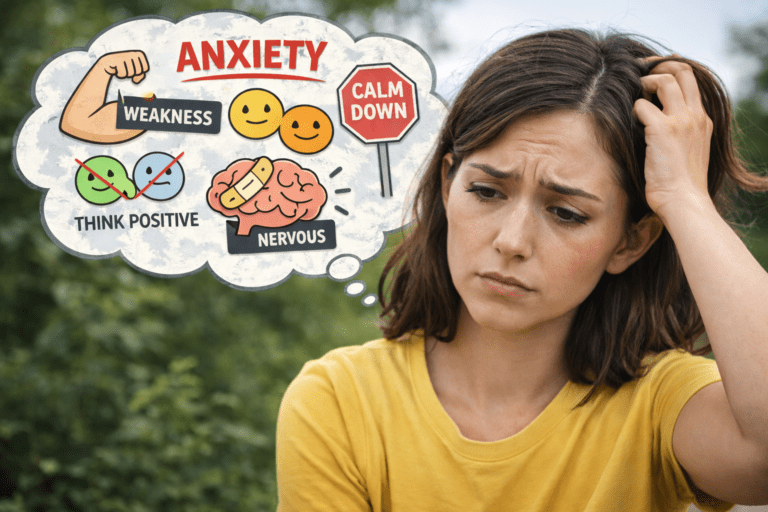
There’s a particular narrative that anxiety is simply “overthinking” — as if you could logic your way out of it. Just stop worrying. Think positive. Have you tried not thinking about it?
Incredibly helpful, that.
What nobody tells you — and this still irritates me — is that anxiety lives in the body as much as the mind. You can’t outthink a racing heart. You can’t rationalise your way past a nervous system that’s already decided something’s wrong. The thoughts are often a symptom, not the cause. But most advice focuses entirely on the mental side.
Then there’s the misconception that anxious people are somehow fragile. In my experience, it’s often the opposite. Many people with anxiety are the ones holding things together — hyper-vigilant, responsible, always scanning for what could go wrong so they can fix it before it does.
That’s exhausting. But it’s not weakness.
Another thing people get wrong: assuming it’s new. This idea that previous generations didn’t struggle with anxiety is largely myth. They just called it “nerves” or “being highly strung” and didn’t talk about it. Or rather, they did, but only in certain ways. The feelings aren’t new. The conversation around them is.
Why Britain Makes It Harder
Let’s be honest about some specifically British factors.
First, the NHS. It’s brilliant, under-resourced, and absolutely creaking under the weight of mental health demand. Getting therapy through the NHS often means months on a waiting list — the average for talking therapies is genuinely painful to contemplate. It’s not the NHS’s fault; it’s decades of underfunding meeting an explosion in need. But the gap between “I need help” and “I’m getting help” can be vast.
Then there’s that particular reluctance to make a fuss. You know the one. You’re struggling, but you don’t want to bother anyone. The GP seems busy. Other people have it worse. You manage. You cope. Until you don’t, but by then you’ve left it quite late.
British work culture doesn’t help either. Long hours, stagnant wages, the creeping sense that you should be grateful just to have a job. The cost of living crisis adds a constant hum of financial anxiety that most people are just… absorbing. Pretending it’s fine. Going to work anyway.
And the weather — I’m not joking about this. Months of grey skies and limited daylight genuinely affect mood and anxiety levels. Seasonal Affective Disorder is one thing, but even sub-threshold effects of dark, dreary January make everything feel slightly heavier.
We’re also not great at admitting when something’s wrong. We’ll apologise for being in pain while someone’s standing on our foot. It’s darkly funny until you realise how much suffering happens quietly, behind closed doors, because nobody wants to be “that person.”
What Actually Helps
I realise this sounds like standard advice territory. Stay with me.
The problem with most recommendations is they assume you have endless time, motivation, and energy — the very things anxiety tends to steal. So here’s what’s worked for me, and what the evidence broadly supports, filtered through the reality of having a job and a life.
### 1. The boring breathing one
Yes, I know. But extended exhales genuinely calm the nervous system. It’s not mindfulness nonsense; it’s basic physiology. Breathing out for longer than you breathe in activates the parasympathetic nervous system.
In theory, you’d do this for five minutes twice a day. In practice, you remember once, do it for forty seconds while waiting for the kettle, and hope for the best. That’s still better than nothing.
### 2. Movement that doesn’t feel like punishment
Exercise helps anxiety more reliably than almost anything else. But here’s what actually happens: you read this advice, feel guilty about your gym membership you haven’t used since February, and the guilt adds to your anxiety.
Walking counts. Dancing badly in your kitchen counts. The bar is on the floor. Pick it up.
### 3. Limiting the doom scroll
Your phone is not helping. You know this. I know this. We all keep checking it anyway.
I’m not suggesting a digital detox — they’re mostly unrealistic unless you’re on a silent retreat somewhere. But small boundaries help. Phone charging in another room at night. One specific hour without checking. Muting the news apps occasionally.
The 24-hour news cycle is optimised for anxiety. It’s quite literally designed to keep you in a state of low-level alarm so you’ll keep watching. Opting out sometimes isn’t ignorance; it’s survival.
### 4. Getting outside (yes, even when it’s grim)
British weather being what it is, this requires commitment. But natural light — even grey, drizzly light — does something useful for circadian rhythms and mood regulation. Ten minutes is enough to shift something.
### 5. Actually talking to someone
Not in a deep, therapeutic sense necessarily. Just admitting to someone you trust that you’re struggling. The relief of saying it out loud is significant. We’re social creatures; isolation makes everything worse.
### 6. Sleep basics before anything fancy
Consistent bedtimes matter more than we’d like to admit. Caffeine after 2pm is probably not helping you. The bedroom being cold makes a difference. This is unglamorous advice, but chronic sleep deprivation makes anxiety substantially worse.
### 7. Writing things down
Brain dumping before bed — just scribbling whatever’s circulating — can genuinely help. You’re not solving anything. You’re just getting it out of your head so it’s not rattling around at 4am.
—
## When You Need More Than Self-Help
I’ll be honest — I ignored my own anxiety for years. Told myself I was “just stressed” and it would pass. It didn’t. It got worse, and eventually I had to accept that willpower wasn’t going to fix it.
Here’s when to see your GP:
– Anxiety is affecting your work, relationships, or daily functioning
– Physical symptoms — heart palpitations, breathlessness, digestive issues — are becoming regular
– You’re avoiding normal activities because of fear
– Sleep problems are constant, not occasional
– You’re using alcohol or other substances to cope
– You’ve had thoughts of self-harm or suicide (please call 111 or go to A&E)
**What to actually say:** You don’t need to be articulate about it. “I’ve been struggling with anxiety and it’s affecting my life” is enough. Write down your symptoms beforehand if that helps. GPs are used to this conversation now — mental health is a significant part of what they deal with.
If the first GP isn’t helpful, you’re allowed to ask for another. This isn’t making a fuss. It’s advocating for yourself.
The NHS talking therapies service (IAPT) is available via self-referral in many areas — you don’t necessarily need a GP to start the process. Waiting times vary wildly. Private therapy is faster but expensive. There’s no perfect answer here, only trade-offs.
Where This Leaves Us
I’m aware I’ve just written 1,800 words about anxiety, which is somewhat ironic given that part of the problem is too much information. So here’s the uncomfortable truth: understanding why anxiety is so common today won’t make it disappear.
But understanding can reduce shame. It can make you feel less broken. And that, in itself, is useful.
What’s helped me most is accepting that anxiety isn’t something to defeat permanently. It’s something to manage, to live alongside, to get better at recognising. Some weeks are worse than others. That’s not failure; it’s just… how it is.
You’re not imagining it. It’s not just in your head. The world is genuinely more demanding than it used to be, and your response to that isn’t pathology. It’s adaptation that’s run slightly off the rails.
Be patient with yourself. Get help if you need it. And maybe charge your phone in another room tonight.