

Why Stress Causes Body Pain: Signs & Cure
Your mother has been complaining about shoulder pain for three years. She’s changed pillows five times, visited two orthopedic doctors, done an MRI, and swallowed enough Crocin to stock a pharmacy. The reports? Mostly normal.
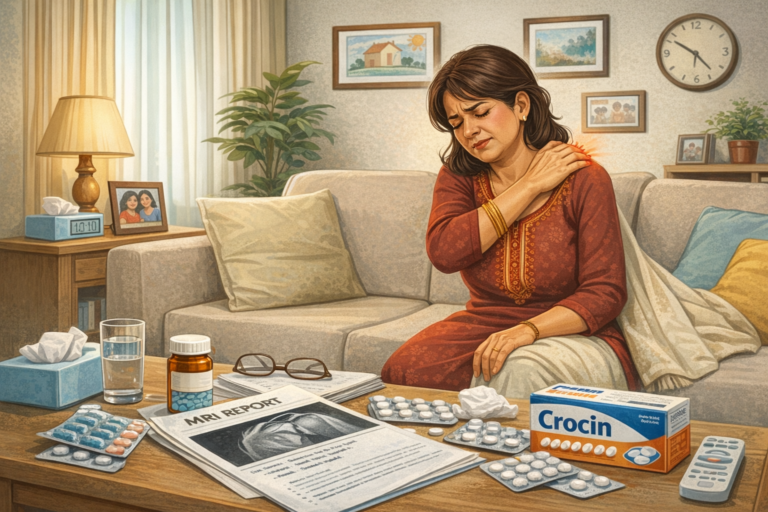
Here’s the truth nobody explained: stress causes body pain more often than most people realise. This is probably the most common health complaint hiding in plain sight across Indian households.
That nagging backache. Those constant tension headaches. That jaw stiffness every morning. Your body might be screaming about something your mind refuses to acknowledge.
This isn’t imported wellness philosophy. The link between mental stress and physical pain is basic human biology. We’ve just stopped talking about it because somewhere, we decided mind problems and body problems live in separate boxes.
They don’t.
After observing dozens of people dealing with unexplained muscle tension, a clear pattern emerges: most spend months chasing physical causes before someone finally asks, “What’s happening in your life right now?”
Let’s have that conversation today.
How Stress Causes Body Pain: The Science Made Simple
Your body hasn’t updated its software in about 200,000 years.
When our ancestors spotted a tiger, their nervous system triggered an immediate response. Muscles tensed. Heart rate increased. Breathing became shallow. Blood rushed to limbs. This helped them fight or escape.
The problem? Your brain can’t tell the difference between a tiger and your manager’s angry email.
Every deadline, every argument with your spouse, every worried thought about EMIs or your child’s school admission – your body responds as if a predator is nearby.
Muscles contract. Shoulders rise. Jaw clenches. Stomach tightens.
Do this for a day, you feel tired. Do this for months, and stress-related body pain becomes your constant companion.
Common Signs of Stress Pain in the Body
Here’s where physical symptoms of stress typically show up:
Neck and shoulders
The classic stress storage zone. That stiffness you feel by Wednesday evening? Accumulated tension, not just bad posture.
Lower back
Bears both physical weight and emotional burden. People going through difficult life phases often develop unexplained lower back pain.
Jaw and face
Many people clench their teeth during sleep without realising. Morning headaches and jaw soreness are telltale signs.
Stomach and gut
Ever felt your stomach “drop” during bad news? Stress directly affects digestion, causing pain, bloating, and irregularity.
Tension headaches
That band-like pressure around your forehead, especially by evening, is often anxiety causing muscle pain in disguise.
Important: The pain you feel is absolutely real. Just because stress causes it doesn’t mean you’re imagining things. Your muscles are genuinely inflamed. Your trigger points are genuinely tight. The origin is psychological, but the damage is physical.
7 Clear Signs Your Pain is Stress-Related
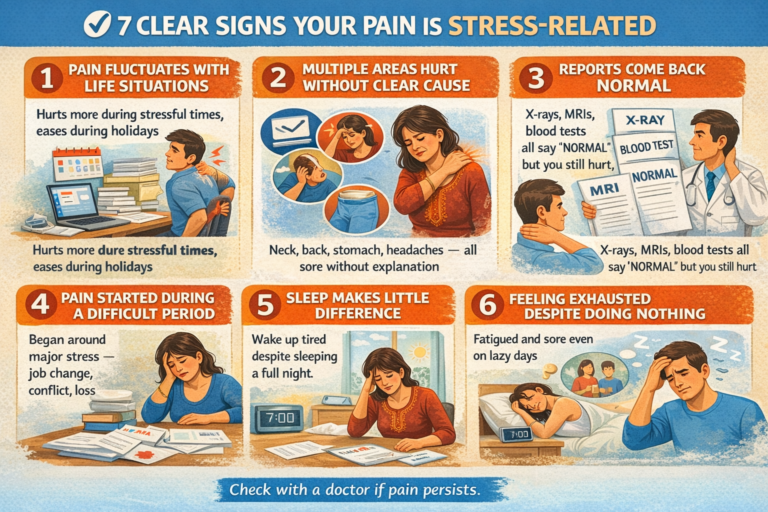
How do you know if your discomfort is among the signs of stress body pain rather than a structural problem?
Watch for these patterns:
Sign 1: Pain Fluctuates With Life Situations
Your back hurts more during work deadlines. It eases during holidays. This pattern strongly suggests stress causes body pain in your case.
Sign 2: Multiple Areas Hurt Without Clear Cause
Neck, shoulders, back, and headaches – all together. Structural problems usually affect one specific area. Widespread pain often indicates stress.
Sign 3: Reports Come Back Normal
You’ve done X-rays, MRIs, blood tests. Everything looks fine. Yet pain persists. This is classic psychosomatic pain.
Sign 4: Pain Started During a Difficult Period
Think back. Did the pain begin around a job change, family conflict, financial stress, or loss? The timing matters.
Sign 5: Sleep Makes Little Difference
You rest, but don’t feel better. Structural injuries typically improve with rest. Stress pain often doesn’t.
Sign 6: You Feel Exhausted Despite Doing Nothing
Chronic stress and fatigue go hand in hand. Your muscles stay contracted even while sitting, burning energy constantly.
Sign 7: Other Stress Symptoms Accompany Pain
Irritability, poor sleep, digestive issues, racing thoughts – if these accompany your pain, stress is likely involved.
Why Indians Especially Suffer From Stress Body Pain
Let’s get specific about why stress causes body pain so commonly in urban India.
The “Always Available” Work Culture
Remember when office meant office? Now your bedroom hosts Zoom calls, and “logging off” is a 2015 concept.
A 2023 survey found Indian employees work 48-52 hours weekly – among the highest globally. Many check emails before brushing teeth and respond to messages past 11 PM.
Your nervous system never receives the “all clear” signal. It stays activated, humming at low intensity, keeping muscles semi-tensed all day.
Family Pressure That Never Stops
The joint family system has warmth, but also comes with constant emotional labour.
Managing expectations of parents, in-laws, relatives who visit unannounced, extended family WhatsApp groups with opinions about everything – this creates background anxiety that many stop noticing consciously.
Your body notices, though. And stress causes body pain as a result.
The Late Night Routine Problem
Here’s what happens in most Indian homes:
- Dinner at 9:30 PM or later
- Screen time until 11 PM
- Sleep by midnight
- Wake up groggy at 7 AM
- Survive on chai until lunch
This pattern destroys sleep quality. Poor sleep directly lowers your pain threshold. Research shows sleep-deprived individuals experience pain more intensely.
That backache feels worse not because anything changed overnight, but because you’re running on four hours of deep sleep.
The Chai-Coffee Overdependence
Four cups of tea by noon. Two coffees in the afternoon. Maybe another chai with evening snacks.
Nobody discusses how caffeine keeps your nervous system heightened. It adds alertness to a brain desperately needing calm. By evening, you’re wired but exhausted, tense but tired.
The “Adjust Karo” Mentality
We’re raised to ignore discomfort. Push through. Don’t complain. “Thoda adjust kar lo.”
By the time most people seek help, they’ve spent months ignoring signals. The body, having been ignored, speaks louder – through chronic stress pain that refuses to leave.
5 Dangerous Mistakes People Make
Mistake 1: Demanding Scans for Every Pain
When your back hurts, the instinct is to demand an MRI. Sometimes, that’s appropriate.
But here’s what doctors rarely explain: almost everyone above 30 shows “degenerative changes” on spine imaging. It’s normal aging. These findings often have nothing to do with your pain.
People fixate on “mild disc bulge” reports for years, convinced it’s the culprit, when stress causes body pain was the actual answer.
Mistake 2: Living on Painkillers
Combiflam, Zerodol, muscle relaxants – these aren’t solutions. They’re pause buttons.
Nothing wrong with occasional use. But if you’re consuming painkillers weekly, you’re managing symptoms while ignoring the cure for stress body pain.
Mistake 3: Believing Stress Means Weakness
Acknowledging that stress causes body pain isn’t admitting defeat. It’s not a character flaw. It’s not being dramatic.
Your body responds exactly as evolution designed it. The problem isn’t you – it’s that modern life constantly triggers survival responses that never get resolved.
Mistake 4: Expecting Overnight Fixes
If you’ve been stressed for two years, your body has adapted. Muscles have learned to stay contracted. Your nervous system defaults to alert mode.
Unwinding takes weeks of consistent effort, not one yoga class or occasional stretching.
Mistake 5: Separating Mind From Body
This is the biggest error.
When stressed, your body changes physically. Cortisol rises. Inflammation increases. Muscle fibres contract. When in physical pain, your mood drops, anxiety increases, patience decreases.
They’re one system. Understanding this is step one toward finding a real cure for stress pain.
Cure for Stress Body Pain: 9 Methods That Actually Work
Let me be realistic – I won’t tell you to quit your job, move to the mountains, or meditate at 4 AM.
Here’s what genuinely helps, based on what fits into real Indian life:
Cure 1: The Body Scan Habit
Time needed: 2 minutes, 3 times daily
Set three phone alarms – morning, afternoon, evening.
When they ring, check:
- Are shoulders raised?
- Is jaw clenched?
- Are you holding breath?
- Is forehead tight?
Simply noticing and relaxing these areas interrupts the tension cycle before it builds. This simple stress pain relief technique costs nothing.
Cure 2: Move in Short Bursts
Forget hour-long gym sessions. They won’t happen consistently.
Instead:
- 10-minute walk after lunch
- 5-minute stretching before bed
- Taking stairs when possible
- Standing and moving every hour
Movement signals your nervous system that the “threat” has passed. It’s safe to relax. This is natural cure for stress body pain.
Cure 3: Fix Dinner Timing
Before changing what you eat, change when you eat.
Try eating by 8 PM for two weeks. Yes, it requires planning. Yes, it feels odd initially.
The improvement in sleep quality – and consequently in pain levels – often surprises people.
Cure 4: The 2 PM Caffeine Cutoff
Simple rule: no tea or coffee after 2 PM.
Switch to warm water, decaf, or buttermilk for later cups. Your evening nervous system will calm down. Sleep will improve. Stress body pain will reduce.
Cure 5: Belly Breathing Practice
When stressed, most people breathe shallowly, using only their chest.
Practice this twice daily:
- Place one hand on chest, one on belly
- Breathe so only the belly hand moves
- Slow inhale for 4 counts, slow exhale for 6 counts
- Repeat 5-10 times
This activates your parasympathetic nervous system – the “rest and digest” mode that calms muscle tension from stress.
Cure 6: Create Genuine Rest Pockets
Scrolling Instagram isn’t rest. Watching Netflix isn’t rest. WhatsApp isn’t rest.
Real rest means:
- Sitting quietly
- Looking out the window
- Doing absolutely nothing
- Listening to calm music without multitasking
Even 10 minutes daily helps reset your nervous system. Essential for stress pain relief.
Cure 7: Talk About What’s Bothering You
You don’t need formal therapy (though therapy helps many).
Simply talking to someone – spouse, friend, sibling – about what’s actually stressing you reduces the physical burden significantly.
Suppressed emotions don’t vanish. They get stored in your body as stress-related pain.
Cure 8: Magnesium-Rich Foods
Low magnesium worsens muscle tension. Include these in your diet:
- Bananas
- Dark leafy greens
- Nuts and seeds
- Dark chocolate (small amounts)
- Whole grains
This supports natural muscle tension relief.
Cure 9: Warm Water Therapy
Simple but effective:
- Warm water bath before bed
- Hot water bag on painful areas
- Warm water drinking throughout day
Heat relaxes contracted muscles and improves blood flow. Traditional Indian remedy that genuinely works for stress body pain cure.
When Your Pain Needs a Doctor
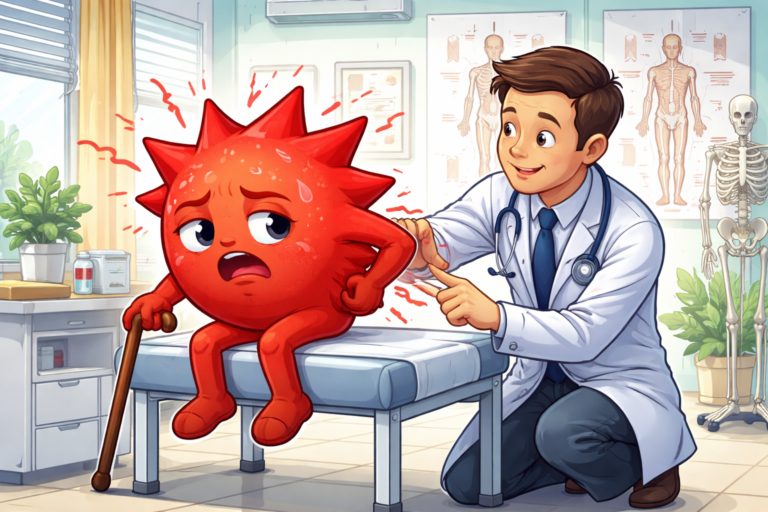
While stress causes body pain commonly, you shouldn’t assume every pain is stress-related.
See a Doctor Immediately If:
- Pain wakes you from sleep
- Pain comes with fever or unexplained weight loss
- Numbness, tingling, or weakness in limbs
- Pain worsens progressively regardless of rest
- Severe headache that feels different from usual
- Pain following trauma or injury
- Any symptoms affecting bladder or bowel function
What to Tell Your Doctor
If scans are normal but pain persists, ask directly:
“Could stress or tension be contributing to my symptoms?”
Many busy OPD doctors don’t explore this unless you mention it. A good physician will consider both physical and psychological factors together.
Frequently Asked Questions
Why does stress cause body pain?
When stressed, your nervous system triggers muscle contraction as part of the fight-or-flight response. Prolonged stress keeps muscles contracted for hours or days, leading to genuine pain, knots, and inflammation. The stress causes body pain connection is pure biology.
What are the main signs of stress body pain?
Key signs of stress body pain include: pain that changes with your stress levels, pain in multiple areas simultaneously, normal medical reports despite symptoms, pain accompanied by fatigue, poor sleep, and irritability.
How long does cure for stress body pain take?
Most people notice improvement within 4-8 weeks of consistent lifestyle changes. Complete healing may take 3-6 months, depending on how long the pattern existed. Patience is essential.
Can stress cause daily tension headaches?
Absolutely. Daily or near-daily tension headaches are common in people with chronic stress, especially those with desk jobs, poor sleep, and high caffeine intake. Addressing stress often resolves these headaches.
Is stress body pain real or imaginary?
Completely real. When stress causes body pain, actual physical changes occur – muscle inflammation, trigger points, nerve sensitivity. The trigger is psychological, but the pain is genuinely physical.
Can I exercise with stress-related muscle pain?
Gentle movement usually helps. Avoid intense exercise initially. Walking, swimming, and gentle stretching support recovery by releasing tension. Listen to your body.
Understanding Your Body’s Language
Your pain is real.
Your suffering is valid.
But the solution might not be where you’ve been searching.
Understanding that stress causes body pain isn’t a diagnosis of weakness. It’s recognition that your system is overloaded, that something needs attention, that your mind has been pushing through while your body has been keeping score.
You can keep ignoring signals, keep taking painkillers, keep searching for structural problems that investigations can’t find.
Or you can start listening differently.
Small changes. Consistent effort. Patience with yourself.
Your body and mind aren’t enemies. They’re not separate. They’re partners, constantly communicating.
Maybe it’s time to pay attention to what they’re saying.
Have you experienced pain that turned out to be stress-related? Share your experience in the comments below – your story might help someone recognise their own patterns.
Disclaimer:
This article provides general health information and doesn’t replace professional medical advice. If you experience persistent pain, please consult a qualified healthcare provider for proper diagnosis and treatment.
[…] […]