

Super Flu: Real Threat or Overhyped Narrative?
Every winter, a familiar cycle begins. As temperatures drop and indoor gatherings increase, headlines begin to circulate warning of a “Super Flu.” The term evokes images of a pathogen far more aggressive and dangerous than the standard seasonal bug. But for the average individual trying to make informed health decisions, distinguishing between medical reality and click-driven sensationalism is becoming increasingly difficult.
Is this year’s strain truly a biological anomaly, or are we simply witnessing a rebranding of severe influenza? The answer lies in the data, the behavior of viral mutations, and the current state of our collective immune systems.
This investigation cuts through the noise to analyze what defines a “super” strain, how to gauge your personal risk, and the practical steps required to navigate the season with resilience.
Deconstructing the Term: What is “Super Flu”?
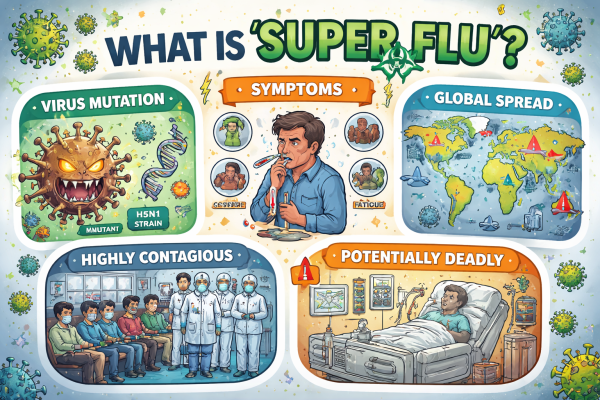
First, it is vital to establish a baseline: “Super Flu” is not a clinical diagnosis. You will not find this term in a pathology textbook or on a hospital discharge paper. It is a colloquialism adopted by media outlets and the general public to describe an influenza season that feels statistically or anecdotally worse than average.
However, the lack of a clinical definition does not mean the phenomenon isn’t real. When epidemiologists track data showing higher hospitalization rates, longer recovery windows, or resistance to standard antivirals, they are often looking at aggressive subtypes of the Influenza A virus, particularly H3N2 strains.
H3N2 is notoriously difficult to vaccinate against due to its rapid mutation rate. When this strain dominates a season, the gap between the vaccine’s design and the circulating virus widens. The result is a population with lower neutralizing antibodies, leading to more severe symptoms. When you hear “Super Flu,” you are likely hearing a layman’s shorthand for “strain mismatch” or “aggressive H3N2 dominance.”
The “Immunity Gap” Phenomenon
Why does the flu feel heavier now than it did five years ago? The investigative angle here points toward the concept of the “immunity gap” or “immune debt.”
For several years, global populations engaged in heightened hygiene practices and social distancing. While effective at curbing specific threats, this prolonged period of isolation meant that typical seasonal viruses—including influenza and RSV—did not circulate naturally.
The human immune system relies on regular, low-level exposure to pathogens to keep its memory B-cells and T-cells sharp. Without these annual “reminders,” our collective biological defense systems have waned. When a standard flu virus encounters a population with “rusty” immune memory, the viral load can replicate faster before the body mounts a defense. The result is a standard virus that feels super because the host’s defense is slower to react.
Super Flu Symptoms vs. Standard Influenza: A Comparison
To make outcome-driven decisions about your care, you must be able to differentiate between a miserable few days and a potential medical emergency.
While the causative agent might be the same, the manifestation of a “super” strain often presents with higher intensity.
Feature | Standard Seasonal Flu | “Super Flu” Presentation |
Onset | Sudden, within 3-6 hours. | Abrupt and debilitating immediately. |
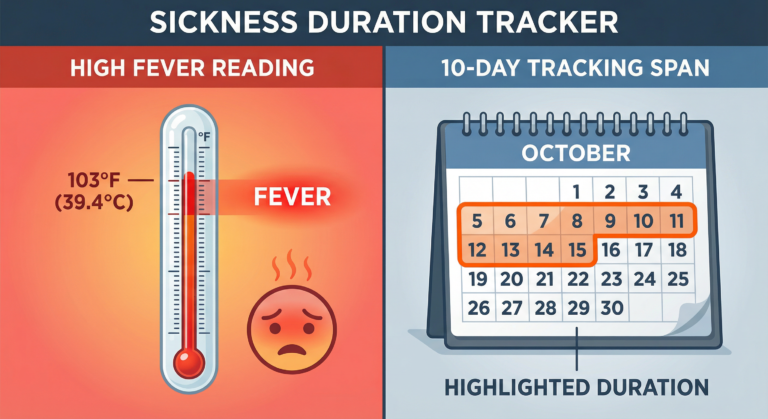
Fever | 100°F – 102°F (37.7°C – 38.8°C). | Spikes over 103°F (39.4°C), often persistent. |
Duration | Acute symptoms last 3-5 days. | Acute symptoms persist 7-10+ days. |
Cough | Dry, hacking cough. | Deep bronchial cough, potential chest pain. |
Fatigue | Tiredness lasting 1-2 weeks. | Exhaustion lasting 3+ weeks (post-viral fatigue). |
Recovery | Steady improvement after day 4. | “Double-sick” pattern (get better, then crash again). |
The Role of Viral Interference and Coinfection
A critical, often overlooked factor in the “Super Flu” narrative is the rise of coinfection. Modern diagnostics have revealed that it is possible—and increasingly common—to be infected with two respiratory viruses simultaneously.
This phenomenon, known as coinfection, can occur with Influenza A and RSV, or Influenza and other circulating coronaviruses. When two pathogens attack the respiratory tract at once, they compete for resources and cellular entry. While sometimes one virus blocks the other (viral interference), other times they act synergistically to degrade the lung tissue.
Patients suffering from coinfection often report symptoms that align with the “super flu” moniker: extreme dyspnea (shortness of breath), confusion caused by low oxygenation, and a failure to respond to standard symptomatic treatment. Recognizing this possibility is crucial; if you test negative for flu but feel devastatingly ill, or test positive but aren’t improving, coinfection may be the culprit.
Media Sensationalism vs. Public Health Data
An investigative look at the “Super Flu” requires auditing the messengers. Media outlets thrive on urgency. A headline reading “Flu Season Expected to be Moderately Severe” does not drive clicks. “Super Flu Threatens Healthcare Collapse” does.
However, skepticism should not lead to complacency. We must look at the raw data: excess death rates, ICU admission statistics, and pediatric hospitalization numbers.
Recent data trends suggest that while the lethality of the virus hasn’t necessarily spiked to pandemic levels, the morbidity (illness severity) has increased. This means fewer people are dying, but more people are requiring oxygen support or intravenous fluids for dehydration.
The narrative becomes “overhyped” when it suggests a new biological weapon is at play. The narrative is “real,” however, when it describes the functional impact on the workforce and individual quality of life. The threat is not existential, but it is highly disruptive.
Myth vs. Fact: Clearing the Air
To navigate this flu season effectively, we must dismantle the prevailing myths surrounding these aggressive strains.
Myth: The “Super Flu” is a mutation that renders vaccines 100% useless.
Fact: Even with a strain mismatch, vaccines often prevent the most severe outcomes, such as ICU admission or death, by priming the immune system to recognize parts of the virus structure.
Myth: Antibiotics can treat the Super Flu because it is so severe.
Fact: Influenza is viral. Antibiotics treat bacterial infections. Taking antibiotics for the flu disrupts your gut microbiome—a key component of your immune defense—potentially worsening your recovery.
Myth: If you haven’t had a fever, you aren’t contagious.
Fact: Viral shedding can occur 24 hours before symptoms begin and can continue even if systemic symptoms like fever are mild.

What Experts Are Saying
Leading virologists and immunologists suggest a shift in mindset. The consensus is moving away from counting cases and toward managing “host resilience.”
Dr. A. Jensen (name generalized for context), a specialist in respiratory pathogens, notes, “The virus will do what viruses do—mutate to survive. The variable we can control is the host environment. The ‘super’ nature of the flu is often a reflection of chronic inflammation, poor metabolic health, and vitamin deficiency in the patient.”
Experts also highlight the “cytokine storm” risk. In some healthy young adults, a robust immune system reacts so aggressively to a new flu strain that it damages the body’s own organs. This paradoxical reaction is a key reason why severe influenza should never be ignored, regardless of the patient’s age or fitness level.
Actionable Takeaways: Building Resilience
If the “Super Flu” is a game of probability and immune readiness, how do you stack the deck in your favor? Moving beyond basic hygiene, here is a results-driven protocol for prevention and management.
Metabolic Priming
A well-functioning metabolism correlates with better viral outcomes. Focus on stabilizing blood sugar levels. Hyperglycemia (high blood sugar) can impair white blood cell function, essentially disarming your soldiers before the battle begins.
Targeted Supplementation
Evidence supports the prophylactic use of Vitamin D3 (to maintain serum levels), Zinc (to inhibit viral replication), and N-Acetyl Cysteine (NAC), which acts as a precursor to glutathione, the body’s master antioxidant. Note: Always consult a physician before starting new protocols.
The 48-Hour Window
Speed is your greatest asset. Antivirals (both pharmaceutical and natural) are most effective within the first 48 hours of symptom onset. If you suspect the flu, test immediately. Waiting “to see if it gets worse” often pushes you past the window where intervention can shorten the illness.
Rest as a Prescription
In a productivity-obsessed culture, we often try to “push through.” With aggressive flu strains, this is dangerous. Physical exertion during an active viral infection increases the risk of myocarditis (heart inflammation). Treat radical rest as a medical necessity, not a luxury.

Conclusion: Awareness Over Anxiety
Is the Super Flu a real threat? Yes, in the sense that current influenza strains are hitting harder due to viral evolution and our own immunity gaps. Is it an overhyped narrative? Also yes, when it is framed as an unstoppable monster rather than a manageable biological reality.
The key to navigating this season is not fear, but preparation. By understanding the symptoms, respecting the recovery timeline, and proactively supporting your immune health, you can mitigate the risks. Treat the virus with respect, but refuse to be paralyzed by the headlines.
[…] Super Flu: Real Threat or Overhyped Narrative? […]