
Let me share something personal.
Last year, I spent two weeks in the hills of Himachal Pradesh. Within days, something strange happened—my constant headaches disappeared, I slept deeper than I had in months, and that annoying afternoon brain fog simply vanished.
When I returned to Delhi, everything came back within 48 hours.
That trip made me realize something uncomfortable: the air pollution health effects in India were silently affecting me—even though I considered myself “healthy.”
Maybe you’re experiencing something similar?
You eat home-cooked meals. You exercise regularly. You don’t smoke. Yet you feel tired all the time, catch colds frequently, and can’t shake off that mental fog.
Here’s the truth: you’re probably not imagining it.
For years, we treated air pollution as a seasonal issue. Diwali smoke clears, winter ends, problem solved—right?
Wrong.
According to the World Health Organization, 99% of the global population breathes air exceeding WHO guideline limits. India consistently ranks among the most polluted countries.
Here are some numbers that shocked me:
City | Average PM2.5 (μg/m³) | WHO Safe Limit | Times Above Safe Limit |
Delhi | 89.1 | 5 | 17.8x |
Mumbai | 46.4 | 5 | 9.3x |
Kolkata | 55.2 | 5 | 11x |
Bangalore | 34.8 | 5 | 7x |
Source: IQAir 2023 World Air Quality Report
Even on “moderate” AQI days, the air contains:
These aren’t just lung irritants. A 2022 study published in The Lancet found that air pollution particles can reach virtually every organ in the human body—including the brain and heart.
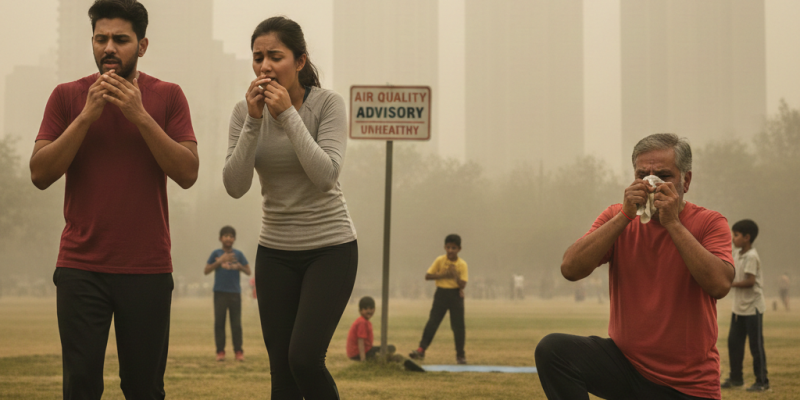
This might sound counterintuitive, but stay with me.
People who already maintain healthy lifestyles—balanced diet, regular exercise, no smoking—often notice pollution-related changes before others do.
Why? Because when everything else is stable, small disruptions become obvious.
✓ Feeling exhausted despite 7-8 hours of sleep
✓ Workouts feeling harder than they should
✓ Persistent throat irritation or dry cough
✓ Difficulty concentrating (brain fog)
✓ Frequent minor infections
✓ Unexplained skin issues
✓ Low mood or increased anxiety
Dr. Arvind Kumar, Founder of Lung Care Foundation and renowned chest surgeon at Sir Ganga Ram Hospital, Delhi, has noted:
“I’m seeing lung damage in 20-year-olds that I used to see in 50-year-old smokers. The lungs of Delhi residents are turning black, and this includes non-smokers.”
What’s happening inside your body? Air pollution triggers chronic low-grade inflammation. This inflammation doesn’t cause immediate disease but slowly interferes with normal bodily functions.
Think of it like a phone running dozens of background apps—everything slows down, battery drains faster, but you can’t pinpoint exactly what’s wrong.
Most people assume air pollution only affects the lungs. That’s a dangerous misconception.
Research now shows air pollution health effects in India extend to nearly every system in your body.
When your body constantly fights microscopic pollutants, it uses significant energy. A Harvard study found that high pollution exposure reduces blood oxygen efficiency by up to 8%.
Result? You feel drained even on days you haven’t done much.
A study in the journal Sleep Health found that people in high-pollution areas experienced:
You might clock 8 hours but wake up feeling unrested.
Pollution particles are 20 times smaller than skin pores. They penetrate easily and cause:
No amount of expensive serums can undo damage from polluted air.
This connection surprised me most. Research from the University of Chicago found that every 10 μg/m³ increase in PM2.5 correlates with:
Feeling unusually irritable or low? It might not just be “stress.”
Your immune system treats pollution particles as invaders, staying constantly activated. Over time, this leads to:
Here’s something that surprised me during my research.
We assume closing windows protects us from outdoor pollution. But indoor air pollution in India is often 2-5 times worse than outdoor air.
Source | Pollutant Released | Health Impact |
Gas stoves | Carbon monoxide, NO2 | Respiratory issues, headaches |
Incense/Dhoop | PM2.5, benzene | Lung irritation, cancer risk |
Mosquito coils | PM2.5, formaldehyde | Equivalent to 100+ cigarettes |
Room fresheners | VOCs, phthalates | Hormone disruption, allergies |
Cleaning products | Ammonia, chlorine | Eye/throat irritation |
According to the Centre for Science and Environment, burning one mosquito coil releases the same amount of PM2.5 as burning 75-137 cigarettes.
The irony? When we seal windows to block outdoor pollution, we often trap indoor pollutants inside.
Let me be honest here—I’m not going to sell you false hope.
Masks and air purifiers help, but they’re not complete solutions.
The Reality Check:
N95/N99 Masks:
Air Purifiers:
Your Daily Commute:
The point isn’t to scare you. It’s to set realistic expectations.
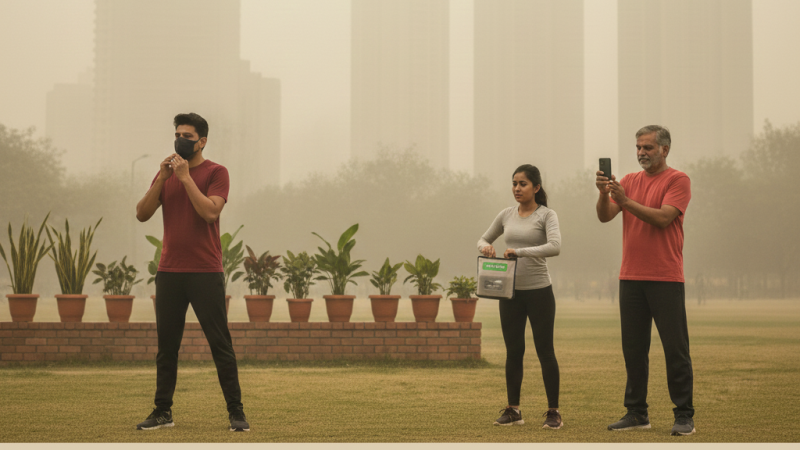
Here’s what actually works—based on research and my personal experience:
Use apps like:
Don’t just check on visibly bad days. Understanding patterns helps you plan better.
According to health guidelines:
Long-term exposure can lead to chronic conditions including COPD, heart disease, and reduced lung capacity. However, reducing exposure and supporting your body can slow and sometimes partially reverse damage.
NASA’s famous study found some plants filter toxins, but you’d need hundreds of plants to significantly impact a room’s air quality. They help marginally and boost mood—but don’t rely on them alone.
When you move to cleaner air, many symptoms improve within weeks. However, some damage—especially to lungs—may take months or years to heal, depending on duration of exposure.
Yes. Children breathe faster, have developing organs, and spend more time outdoors. Studies show children in polluted cities have measurably reduced lung development.
Here’s what bothers me most about this crisis.
Air pollution rarely sends people rushing to hospitals. Instead, it quietly degrades quality of life in ways we’ve normalized:
When everyone around you feels the same way, you stop questioning why.
But normal isn’t the same as healthy.
A 2019 study by IIT Bombay estimated that air pollution reduces the average Indian’s life expectancy by 5.2 years. In Delhi, that number rises to nearly 12 years.
We’ve accepted something unacceptable.

I’ll be honest—we’ve all become numb to air pollution news.
Another AQI headline. Another government promise. Another shrug.
But that numbness is precisely what makes this dangerous. The threats that don’t feel urgent are often the ones that hurt us most—slowly, silently, irreversibly.
Understanding air pollution health effects in India isn’t about living in fear. It’s about making informed choices.
There’s a real difference.
If you’ve been feeling persistently tired, mentally foggy, or just “not quite yourself” despite doing everything else right—you’re not imagining it.
The air pollution health effects in India are real, documented, and affecting millions of healthy people every single day.
Air pollution might not be the only reason for your symptoms. But dismissing it because “everyone deals with it” won’t protect your health.
Sometimes the first step toward feeling better is simply acknowledging what’s really going on.
Small changes, made consistently, add up. You can’t control the air outside your window—but you can control how you respond to it.
That’s not fear. That’s informed living.
Have you noticed unexplained changes in your health or energy levels? Share your experience in the comments—I’d genuinely love to hear from you.