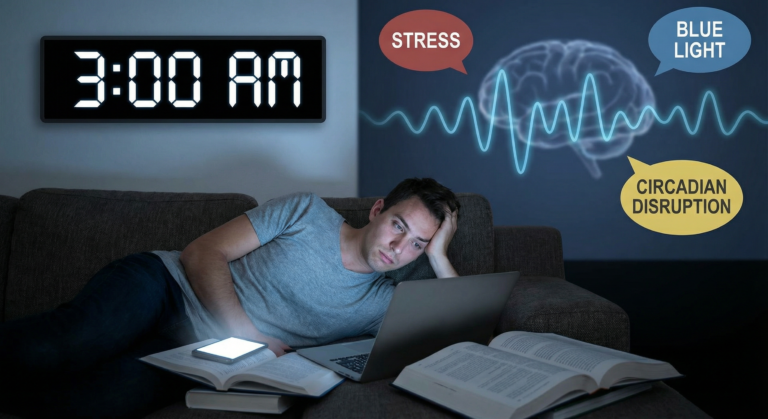
Have you ever slept for eight hours, taken an entire weekend off, and still woken up feeling completely drained?
You’re not imagining it — and you’re certainly not alone.
According to a 2023 sleep health survey, 76% of adults report feeling tired at least three days per week, even when getting adequate sleep. This phenomenon has become so widespread that medical professionals now refer to it as the “exhaustion epidemic.”
Here’s the uncomfortable truth: the problem usually isn’t sleep itself.
The deeper issue is that modern rest often fails to restore the body and mind properly. We live in a world designed to keep us constantly engaged, stimulated, and producing — and our recovery systems simply cannot keep up.
In this comprehensive guide, we’ll explore the real reasons why rest never feels enough anymore, examine what science tells us about genuine recovery, and share proven strategies to reclaim your energy once and for all.
Before diving into solutions, let’s understand what we’re really dealing with.
Sleep deprivation and chronic fatigue are not the same thing.
Condition | Definition | Solution |
Sleep Deprivation | Not getting enough hours of sleep | Sleep more |
Chronic Fatigue | Low energy despite adequate sleep | Improve recovery quality |
Research from Stanford University’s Sleep Medicine Division suggests that most adults today aren’t actually sleep-deprived in the traditional sense. Instead, they’re experiencing recovery dysfunction — a state where the body cannot properly restore itself despite adequate rest time.
This explains why naps don’t help, weekends feel wasted, and vacations sometimes leave you more tired than before.
Your autonomic nervous system operates in two primary states:
True recovery only happens in parasympathetic mode.
The problem? Modern life constantly triggers sympathetic activation:
Dr. Matthew Walker, neuroscientist and author of Why We Sleep, explains that chronic stress keeps the body in a “hypervigilant state” where deep restoration becomes nearly impossible.
Key Insight: Physical rest without nervous system regulation is incomplete rest. Your body may be still, but your stress hormones remain elevated.
What does your typical “relaxation” look like?
For most people, it involves:
These activities feel relaxing, but research tells a different story.
A 2022 study published in the Journal of Behavioral Medicine found that screen-based leisure activities:
You may feel entertained, but your nervous system doesn’t register it as rest.
This is one of the most overlooked causes of chronic tiredness in the modern era.
[Related: Digital Detox Guide — How to Disconnect Without Missing Out]
This insight changes everything for most people.
Not all tiredness is the same. Different types of fatigue require different recovery approaches.
Exhaustion Type | How It Feels | What Actually Restores You |
Physical | Body aches, muscle tiredness | Sleep, gentle movement, massage |
Mental | Brain fog, difficulty focusing | Silence, nature, reduced stimulation |
Emotional | Feeling numb or overwhelmed | Connection, journaling, expression |
Social | Drained after interactions | Solitude, quiet alone time |
Sensory | Headaches, overstimulation | Darkness, silence, minimal input |
Creative | Feeling uninspired, stuck | Play, novelty, artistic expression |
Most people default to physical rest (sleeping, lying down) regardless of what type of exhaustion they’re actually experiencing.
If you’re mentally exhausted but only resting physically, you won’t feel restored.
Burnout rarely arrives dramatically. Instead, it creeps in gradually over months or years.
The World Health Organization officially recognizes burnout as an “occupational phenomenon” characterized by:
When burnout becomes your baseline, short periods of rest cannot undo long-term depletion.
Think of it this way: if your energy account has been overdrawn for years, one weekend of rest is like depositing spare change into massive debt.
The rest isn’t failing — the deficit is simply too large.
Here’s a pattern that sabotages millions of people:
You finally sit down to rest, and immediately your mind says:
This guilt triggers stress responses during rest itself, effectively canceling out recovery benefits.
A 2021 study from the American Psychological Association found that people who feel guilty while resting show elevated cortisol levels throughout their “relaxation” time.
You cannot fully recharge while mentally tensed about recharging.
Sleep quantity and sleep quality are completely different things.
You might spend 8 hours in bed, but that doesn’t mean you’re getting 8 hours of restorative sleep.
Factors that destroy sleep quality without affecting duration:
According to the National Sleep Foundation, only 10-20% of total sleep time is spent in deep restorative stages for most adults. Poor sleep hygiene reduces this even further.
[Related: Sleep Hygiene 101 — Small Changes That Transform Your Energy]
Sometimes, no amount of rest will ever feel “enough” because the real problem isn’t your rest — it’s your life.
Ask yourself honestly:
Rest supports recovery, but it cannot substitute for necessary life changes.
If your daily life consistently depletes you faster than rest can restore you, exhaustion becomes inevitable.

Now that we understand the problems, let’s explore proven solutions.
Before resting, help your nervous system shift into parasympathetic mode:
Quick regulation techniques:
These techniques signal safety to your brain, preparing it for genuine recovery.
Before resting, always ask: “What type of tired am I right now?”
Then choose rest accordingly:
Targeted rest works faster than generic rest.
White space is uncommitted time with no agenda, no phone, and no guilt.
Start small:
This teaches your nervous system that slowing down is safe.
Over time, your capacity for deep rest expands significantly.
Your brain needs transition time between activity and sleep.
Create a consistent 30-45 minute wind-down routine:
Consistency matters more than perfection. Even partial routines help significantly.
Identify and address what’s draining you:
Common energy leaks:
Fixing these root causes multiplies the effectiveness of all other rest strategies.
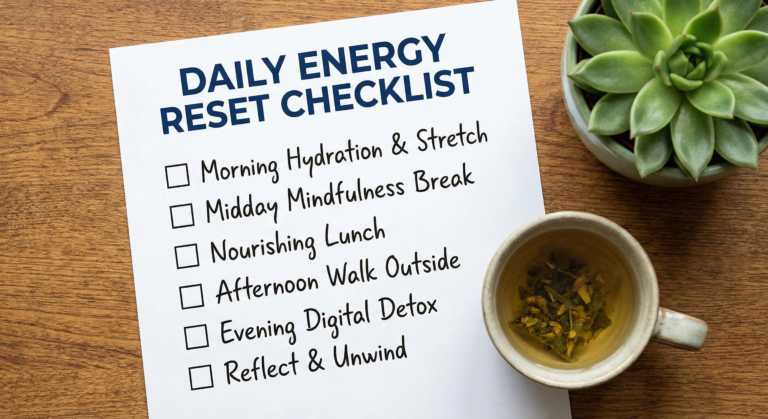
Implement these habits for sustained improvement:
✅ Morning: Get natural sunlight within 30 minutes of waking
✅ Midday: Take one 10-minute phone-free walk outside
✅ Afternoon: Practice 5 minutes of intentional breathing
✅ Evening: Stop all screens 60+ minutes before sleep
✅ Night: Keep bedroom cool (65-68°F), dark, and device-free
✅ Weekly: Schedule one completely unplanned rest block
✅ Monthly: Evaluate and address major energy drains
Sleep duration doesn’t guarantee restoration. Factors like chronic stress, poor sleep quality, nervous system dysregulation, and wrong rest types can leave you exhausted despite adequate hours. Focus on sleep quality, stress management, and matching rest to your specific exhaustion type.
Occasional tiredness is completely normal. However, persistent exhaustion lasting weeks or months signals that your recovery systems need attention. This could indicate burnout, lifestyle imbalances, sleep disorders, nutritional deficiencies, or underlying health conditions worth investigating.
Improve rest quality rather than quantity. Regulate your nervous system before resting, match rest types to exhaustion types, reduce screen-based relaxation, create proper wind-down rituals, and address root causes of energy depletion. These strategies often work better than simply adding more sleep hours.
Being tired resolves with adequate rest. Burnout persists regardless of rest because it involves deep emotional, mental, and motivational depletion accumulated over extended periods. Burnout requires more comprehensive recovery approaches including lifestyle evaluation and often professional support.
Consult a healthcare provider if fatigue persists for more than two weeks despite adequate sleep, interferes with daily functioning, accompanies other symptoms like unexplained weight changes, or doesn’t respond to lifestyle improvements. Conditions like thyroid disorders, anemia, and sleep apnea require professional diagnosis.
Here’s the reality we need to accept:
In the modern world, genuine rest is no longer automatic. It’s a skill that requires intentional practice.
Previous generations didn’t need to “learn” how to rest. Natural rhythms — darkness, seasons, limited technology — enforced recovery automatically.
We no longer have that advantage.
Our environments are engineered to maximize engagement, productivity, and stimulation around the clock. Feeling tired all the time isn’t a personal failure — it’s a predictable response to unsustainable demands on our biology.
The solution isn’t simply more rest. It’s smarter, deeper, more intentional rest.
This means:
Start today. Choose one strategy from this guide. Practice it consistently for one week. Notice how your body responds.
Small, consistent changes create profound transformation over time.
You deserve rest that actually restores you. And now you have the knowledge to make it happen.
Share this article with someone who needs to hear this message.
Save it for the next time exhaustion hits.
Comment below: Which type of exhaustion resonates most with your experience right now?